admin

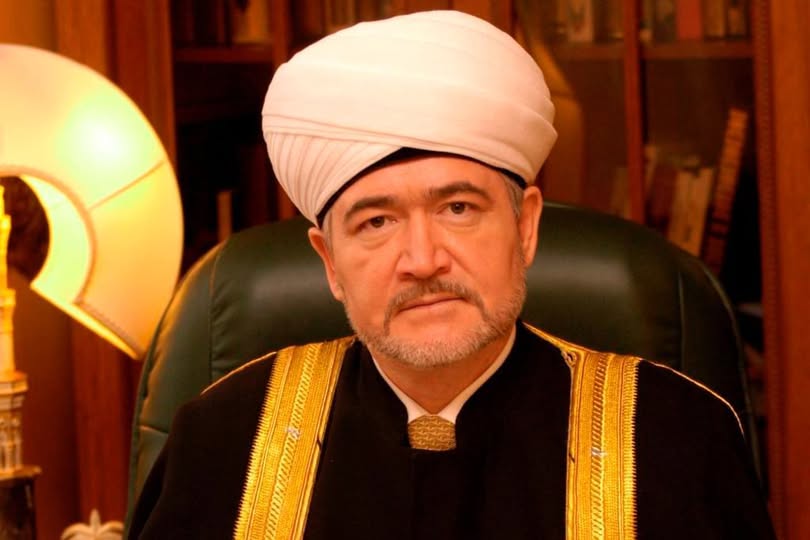
Muslim Council of Elders Member His Eminence Sheikh Nuriddin Kholiknazarov: The servant’s relationship with their Lord is the light that illuminates their path and from which they draw strength, tranquillity, and success in both worlds

His Eminence Sheikh Nuriddin Kholiknazarov, a member of the Muslim Council of Elders and Chairman of the Muslim Board in Uzbekistan, emphasized that the greatest possession a person has in their life is their relationship with their Lord. This relationship is the light that illuminates their path, the source from which they draw strength, tranquillity, and success in both this world and the hereafter. He pointed out that this relationship is not merely a series of rituals performed by the servant but is a deep spiritual connection based on love, submission, and appreciation.

In the eleventh episode of the Ramadan program “Humanitarian Values with the Elders,” broadcasted on the social media platforms of the Muslim Council of Elders, His Eminence Sheikh Nuriddin Kholiknazarov stated that faith is the foundation upon which the relationship with Allah is built. It is the certainty that Allah is the Creator, the Merciful, the Just. When faith is present in the heart, it becomes a motivation that makes the servant worship their Lord with love, not just out of fear of punishment but out of longing for His satisfaction and closeness.

The member of the Muslim Council of Elders added that worship is the essence of the servant’s relationship with their Lord and is a manifestation of the truth of monotheism and submission to Allah. Allah Almighty says in the Holy Book: “I did not create jinn and humans except to worship Me” [The Quran, 51:56]. Worship is not limited to prayers and fasting but includes every act done by the servant in their daily life with the intention of drawing closer to Allah. It is the shortest path to closeness to Allah. As worship increases, so does the depth of the servant’s relationship with their Lord, leading to profound internal peace. Prayer is also an important means of direct communication between the servant and their Lord, expressing the servant’s desire to turn to Allah at all times, whether in hardship or ease, showing their dependence on and need for Him in all aspects of their life.
 
He also explained that one of the manifestations of the servant’s relationship with their Lord is gratitude for His blessings, which involves acknowledging Allah’s favors and recognizing His grace upon them. Gratitude should not only be expressed in words but must also be accompanied by actions. Allah Almighty says: “And ˹remember˺ when your Lord proclaimed, ‘If you are grateful, I will certainly give you more. But if you are ungrateful, surely My punishment is severe’”[The Quran, 14:7]. Patience is also one of the crucial qualities that a servant must embody in their relationship with their Lord. It indicates enduring the hardships and trials faced in life. If the servant manages their relationship with their Lord based on this principle, they will attain a high status and elevated degree with Allah.

During the blessed month of Ramadan, the Muslim Council of Elders broadcasts five Ramadan programs on its platforms: “Al-Imam Al-Tayeb,” “One Ummah,” “Humanitarian Values with the Elders,” “Month of Harmonious Coexistence,” and “Our Ethics.” These programs are part of the Council’s media strategy aimed at utilizing all platforms to promote and enhance the values of dialogue, peace, tolerance, and human coexistence.

Muslim Council of Elders Member His Eminence Sheikh Nuriddin Kholiknazarov: The servant’s relationship with their Lord is the light that illuminates their path and from which they draw strength, tranquillity, and success in both worlds Read More »

Muslim Council of Elders Organizes Interfaith Iftar for Religious Leaders in Pakistan

The Muslim Council of Elders organized a communal Iftar for religious leaders and figures in Pakistan, attended by a large number of prominent leaders and representatives from various faiths, as well as ministers, officials, and academics. The initiative comes as part of the Council’s mission to promote the values of dialogue, peaceful coexistence, and human fraternity.

Now in its second consecutive year, the Iftar gathering witnessed the participation of distinguished figures, including His Excellency Mr. Makhdoom Zada, Minister of Khyber Pakhtunkhwa Province; Mr. Noor-ul-Haq Qadri, former Federal Minister for Religious Affairs; Rt. Reverend Nadeem Kamran, General Bishop of the Evangelical Church in Pakistan; Ayatollah Javed Iqbal, a prominent Shia scholar; Dr. Muhammad Zia-ul-Haq, Secretary General of the Islamic Research Institute; Mr. Haroon Sarab Diyal, Hindu leader and President of the Pakistan World Religion Foundation; Dr. Qibla Ayaz, former Chairman of the Council of Islamic Ideology; and Professor Dr. Kalyan Singh, a Sikh academic. The event also welcomed representatives of religious minorities such as Arun Kumar, Coordinator of the Hindu Council; Sardar Ranjit Singh, former member of the local parliament; and Christopher Sharaf, Coordinator of the Saiban Pakistan program for Christian minorities.

Among the attendees were also a number of prominent academics, including Dr. Rashid Ahmad, Director of the Sheikh Zayed Islamic Centre in Peshawar; and Dr. Muhammad Abdullah, Director of the Sheikh Zayed Centre at the University of Lahore. The event drew university presidents, cultural and media figures, and representatives from the ministries of endowments, religious affairs, environment, and education, as well as youth representatives from various religions and international organizations operating in Pakistan.

The attendees extended their congratulations to the Muslim Council of Elders, under the chairmanship of His Eminence Prof. Dr. Ahmed Al-Tayeb, Grand Imam of Al-Azhar, on the occasion of the Council’s 11th anniversary. They praised the Council’s efforts in promoting the values of tolerance, coexistence, and peace, highlighting the importance of instilling these values in future generations to build bridges of communication between followers of different faiths. Dr. Kalyan Singh commended the Council’s role in fostering interfaith harmony and addressing global humanitarian challenges, while Rt. Reverend Nadeem Kamran and Mr. Haroon Diyal praised the Council’s contributions in Pakistan. Ayatollah Javed Hussain highlighted the success of the first Intra-Islamic Dialogue Conference, co-organized by the Council and hosted by the Kingdom of Bahrain in February, while Dr. Zia-ul-Haq affirmed the Council’s tangible impact on the global stage through its efforts at international forums.

This gathering reaffirms the Muslim Council of Elders’ commitment to fostering interfaith dialogue and mutual understanding. It is part of a broader series of initiatives by the Council aimed at establishing global peace through dialogue and cooperation among followers of different religions and cultures.

Muslim Council of Elders Organizes Interfaith Iftar for Religious Leaders in Pakistan Read More »

Muslim Council of Elders Member His Eminence Sheikh Ahmad al-Noor al-Helw: Muslims Should Increase Acts of Devotion and Do Good Deeds During the Blessed Month of Ramadan.

His Eminence Sheikh Ahmad al-Noor al-Helw, a member of the Muslim Council of Elders and the Grand Mufti of the Republic of Chad, emphasizes the importance of increasing acts of devotion and doing good deeds during the holy month of Ramadan. Ramadan is the month of goodness and blessings, ordained for this Ummah to foster closeness to Allah and develop piety, as Allah says, “O believers! Fasting is prescribed for you—as it was for those before you—so perhaps you will become pious (mindful of Allah)” [The Quran, 2:183]. This piety in Ramadan is gained through fasting and its related acts of kindness towards the fasting, the poor, and the needy.

In the tenth episode of the ‘Humanitarian Values with the Elders’ program, which is broadcast on the platforms of the Muslim Council of Elders, His Eminence explained that Allah Almighty has given wealth to the rich to test them with the poor, bestowing His grace upon them and then commanding them to spend, as Allah says, “And donate from what We have provided for you before death comes to one of you, and you cry, ‘My Lord! If only You delayed me for a short while, I would give in charity and be one of the righteous.’ But Allah never delays a soul when its appointed time comes. And Allah is All-Aware of what you do” [The Quran, 63:10-11]. His Eminence further noted that there are many such verses that especially command the believer during seasons of goodness to outdo others in charity, reflecting the generosity of Prophet Muhammad (PBUH), which was at its peak during Ramadan. 

His Eminence Sheikh Al-Helw added that it is essential for Muslims to increase their acts of obedience and good deeds during this blessed month to gain Allah’s satisfaction and love, ensuring success in this life and the hereafter. Fortunate is the one who utilizes this month to amass goodness and show benevolence to others.

During Ramadan, the Muslim Council of Elders broadcasts five Ramadan programs: ‘Al-Imam Al-Tayeb’, ‘One Ummah’, ‘Humanitarian Values with the Elders’, ‘Month of Harmonious Coexistence’, and ‘Our Ethics, as part of the Council’s media strategy to use all platforms to promote and enhance the values of dialogue, peace, tolerance, and human coexistence.

Muslim Council of Elders Member His Eminence Sheikh Ahmad al-Noor al-Helw: Muslims Should Increase Acts of Devotion and Do Good Deeds During the Blessed Month of Ramadan. Read More »

Muslim Council of Elders: 11 Years of Promoting a Culture of Dialogue, Tolerance, and Human Coexistence

Today marks the eleventh anniversary of the founding of the Muslim Council of Elders, under the leadership of His Eminence Professor Dr. Ahmed Al-Tayeb, Grand Imam of Al-Azhar. The Council comprises a distinguished group of scholars, sages, and dignitaries from across the Muslim world—individuals known for their wisdom, integrity, moderation, and independence. Established on 21 Ramadan 1435 AH, corresponding to July 19, 2014, the Council was founded to promote peace, uphold the values of dialogue, tolerance, and human coexistence, support just causes across the Muslim world, strengthen unity, and amplify the role of religious leaders in addressing global challenges.
His Excellency Judge Mohamed Abdelsalam, Secretary-General of the Muslim Council of Elders, emphasized that since its inception eleven years ago, the Council has devoted its efforts to advancing peace, fostering human fraternity and mutual understanding, and highlighting the tolerant values of Islam in its engagement with others. He underscored the importance of dialogue, mutual respect, and interreligious understanding, as well as bolstering intra-Islamic dialogue to foster unity and solidarity. He also expressed the Council’s deep gratitude—on behalf of its chairman, members, and staff—to the United Arab Emirates and its wise leadership for their continued support of the Council’s initiatives to entrench the values of peace and coexistence.
As part of its mission to foster tolerance and peaceful coexistence, the Council launched a series of East–West Dialogue Rounds in cities such as Florence, Paris, Geneva, Cairo, Abu Dhabi, and Manama. These efforts aimed to realize the Council’s vision of promoting peace through mutual understanding and coexistence and enhancing dialogue between religions and cultures. These initiatives culminated in the historic signing of the Document on Human Fraternity in February 2019 by His Eminence the Grand Imam and His Holiness Pope Francis, Pontiff of the Catholic Church.
The Council also launched International Peace Convoys and Ramadan Missions, engaging communities across continents to strengthen ties with Muslims worldwide, promote enlightened and moderate thought, correct misconceptions, and encourage positive integration. These efforts also sought to counter hatred, racism, extremism, terrorism, and Islamophobia. Furthermore, the Council has organized numerous international conferences that explored themes such as peace, citizenship, diversity, coexistence, climate responsibility, and meaningful media discourse.
Recognizing youth as central to building a conscious and peaceful generation, the Council has launched a number of youth-focused initiatives. These include the Emerging Peacemakers Forum, the Global Student Dialogues on Human Fraternity, the Azadi Fellowship in Pakistan to promote interreligious and intercultural dialogue and counter extremism, the Ethics Education Fellowship to integrate universal values into childhood education, and the Bridges That Unite Us initiative to build volunteerism and instill the principles of dialogue, tolerance, and coexistence.
In 2019, believing in the power of the written word, the Council established Al-Hokama Publishing, a dedicated publishing house focused on producing and translating works that promote the values of tolerance and coexistence. To date, it has published over 250 works in more than seven languages. In 2020, the Council also launched the Al-Hokama Center for Peace Research, the first international, non-governmental research center of its kind, serving as a hub for knowledge and expertise in the service of peace in the Muslim world.
The Council’s regional offices have served as beacons of hope and platforms for communication and peaceful coexistence. Branches have been established in several countries, including Indonesia, Pakistan, Malaysia, and Kazakhstan, to build effective platforms for engagement with Muslim communities around the world.
With climate change among the most urgent challenges of our time, the Muslim Council of Elders has led exceptional efforts to protect our planet. These include organizing the Southeast Asia Religious Leaders Conference on Climate, the Global Summit of Religious Leaders for Climate in Abu Dhabi—which led to the issuance of the landmark “Call of Conscience: The Abu Dhabi Joint Statement on Climate”—as well as establishing the first-ever Faith Pavilion at a UN Climate Conference during COP28 in Dubai. The Council also co-organized the Global Summit of Religious Leaders for Climate in Baku, Azerbaijan, and will co-host the Faith Pavilion at COP29.
The Council has also continued to champion the causes of the Muslim world and laid the foundation for a new phase of intra-Islamic dialogue, following the call of the Grand Imam at the Bahrain Dialogue Forum to strengthen Islamic unity. A delegation from the Council visited Iraq and met with diverse religious and societal groups to address pressing Islamic issues, promote reconciliation, and strengthen the bonds of religious fraternity. Additional meetings were held with leading scholars and authorities from various Islamic schools of thought.
On February 19–20, 2025, the Kingdom of Bahrain hosted the first edition of the Intra-Islamic Dialogue Conference, under the gracious patronage of His Majesty King Hamad bin Isa Al Khalifa. The conference was attended by the Grand Imam and over 400 scholars, thinkers, and religious authorities representing various Islamic traditions. The event concluded with the launch of the Call for the People of Qiblah, a foundational charter of principles designed to enhance dialogue and understanding among the diverse schools of Islamic thought.
Year after year, the Muslim Council of Elders continues to uphold and spread universal human values—affirming the importance of dialogue, tolerance, mutual respect, and acceptance of others; protecting religious symbols and sanctities; presenting the true image of Islam; confronting hate speech, extremism, and Islamophobia; and strengthening ties with Muslim communities worldwide—in pursuit of a more peaceful and compassionate future for all humanity.

Muslim Council of Elders: 11 Years of Promoting a Culture of Dialogue, Tolerance, and Human Coexistence Read More »

On Mother’s Day: Muslim Council of Elders Affirms Islam’s Reverence for Mothers and Calls for Honoring, Respecting, and Caring for Them

The Muslim Council of Elders, under the chairmanship of His Eminence Professor Dr. Ahmed Al-Tayeb, Grand Imam of Al-Azhar, affirms that Islam has greatly elevated the status of mothers and strongly advocates for their appreciation, respect, and compassionate care, in recognition of their enduring sacrifices and unwavering devotion to their children. Allah Almighty says in the Glorious Quran: “And your Lord has decreed that you not worship except Him, and to parents, good treatment. Whether one or both of them reach old age while with you, say not to them so much as, ‘uff,’ and do not repel them but speak to them a noble word.” (The Quran, 17:23) And also: “And We have enjoined upon man care for his parents. His mother carried him with hardship and gave birth to him with hardship.” (The Quran, 46:15) The Prophet Muhammad (PBUH) further emphasized the mother’s esteemed position, saying: “Paradise lies at her feet”. Islam, the Council emphasized, urges righteousness and dutifulness toward one’s parents—even after their passing—through praying for them, seeking forgiveness on their behalf, fulfilling their commitments, maintaining the bonds of kinship that stem from them, and honoring their close friends.

On this special occasion, the Muslim Council of Elders extends its deepest respect and appreciation to all mothers across the Arab and Muslim worlds, and to mothers worldwide, for their unmatched contributions in nurturing, compassion, kindness, and raising generations upon the values of goodness, compassion, and peace.

The Council also calls upon academic, religious, and media institutions—on this Mother’s Day—to help further promote and elevate the role of mothers in society, in recognition of their rights and in support of their noble mission. A mother, the Council affirms, is the cornerstone of future generations and a wellspring of values such as tolerance, compassion, and peaceful coexistence.

On Mother’s Day: Muslim Council of Elders Affirms Islam’s Reverence for Mothers and Calls for Honoring, Respecting, and Caring for Them Read More »

Muslim Council of Elders Congratulates Imam Al-Tayeb on the 15th Anniversary of His Inauguration as Grand Imam of Al-Azhar

The Muslim Council of Elders extends its heartfelt congratulations to His Eminence Professor Dr. Ahmed Al-Tayeb, Grand Imam of Al-Azhar and Chairman of the Muslim Council of Elders, on the occasion of the 15th anniversary of his inauguration as Grand Imam of Al-Azhar, which falls on March 19.

His Excellency Judge Mohamed Abdelsalam, Secretary-General of the Muslim Council of Elders, stated that under Imam Al-Tayeb’s leadership, Al-Azhar has witnessed significant progress and a remarkable transformation across all academic and religious spheres. During this period, Al-Azhar has reclaimed its global leadership by actively promoting the true essence of Islam and countering all forms of hatred, racism, extremism, terrorism, and Islamophobia.

The Secretary-General further emphasized that, driven by his deep belief in the importance of fostering dialogue and promoting a culture of tolerance and coexistence, Imam Al-Tayeb has dedicated these years to strengthening dialogue between East and West, uniting the ranks of the Muslim Ummah, and reaffirming the crucial role of religion in the lives of nations and societies. He has also actively encouraged religious leaders and figures to collaborate in addressing global challenges and advancing the values of tolerance, peace, and human fraternity.

Muslim Council of Elders Congratulates Imam Al-Tayeb on the 15th Anniversary of His Inauguration as Grand Imam of Al-Azhar Read More »

Muslim Council of Elders: Zayed Humanitarian Day Embodies the Highest Values of Giving, Tolerance, and Human Fraternity

The Muslim Council of Elders, under the chairmanship of His Eminence Professor Dr. Ahmed Al-Tayeb, Grand Imam of Al-Azhar, affirms that Zayed Humanitarian Day represents a celebration of the highest values of giving, tolerance, and human fraternity. It draws inspiration from the legacy of the late Sheikh Zayed bin Sultan Al Nahyan, may God rest his soul, whose life was dedicated to spreading goodness, compassion, peace, mercy, and solidarity among people of all backgrounds.

His Excellency Judge Mohamed Abdelsalam, Secretary-General of the Muslim Council of Elders, emphasizes that commemorating Zayed Humanitarian Day is a significant opportunity to reflect on the legacy of goodness and humanitarian work established by the late Sheikh Zayed bin Sultan Al Nahyan, may God rest his soul. As the Founding Father of the United Arab Emirates, he transformed the nation into a leading model of compassion, tolerance, and human fraternity, extending a helping hand to all those in need.

The Secretary-General further highlights that Sheikh Zayed left behind a lasting, inspiring, and sustainable humanitarian legacy that continues to guide advocates of goodness, peace, and coexistence worldwide. He notes that the UAE and its wise leadership remain committed to following in the footsteps of their visionary founder through diverse initiatives and pioneering projects that spread kindness and goodwill across the globe

Muslim Council of Elders: Zayed Humanitarian Day Embodies the Highest Values of Giving, Tolerance, and Human Fraternity Read More »

Muslim Council of Elders Strongly Condemns Israeli Occupation’s Aggression on Gaza

The Muslim Council of Elders, led by His Eminence Prof. Dr. Ahmed Al-Tayeb, Grand Imam of Al-Azhar, strongly condemns the Israeli occupation’s bombardment of various areas in the Gaza Strip, which has resulted in the martyrdom and injury of dozens of innocent civilians.

The Council reiterates it firm rejection of all violations committed by the Israeli occupation against the Palestinian people and calls for an urgent international intervention to enforce a permanent ceasefire, ensure the immediate entry of humanitarian aid and relief to innocent civilians, and initiate reconstruction efforts in accordance with the plan approved during the emergency meeting of the Arab League, held on March 4 in Egypt.

Reaffirming its unwavering stance, the Muslim Council of Elders stresses the urgent need for a just and lasting solution to the Palestinian cause, recognizing the Palestinian people’s right to establish their independent state with Jerusalem as its capital, and bringing an end to their decades-long suffering of over 70 years.

Muslim Council of Elders Strongly Condemns Israeli Occupation’s Aggression on Gaza Read More »

Muslim Council of Elders Welcomes the Completion of Peace Negotiations Between Armenia and Azerbaijan

The Muslim Council of Elders, led by His Eminence Prof. Dr. Ahmed Al-Tayeb, Grand Imam of Al-Azhar, welcomes the announcement of the successful conclusion of peace negotiations between the Republic of Azerbaijan and the Republic of Armenia. The Council acknowledges this significant step as a crucial milestone toward achieving peace and enhancing stability in the Caucasus region.
In a statement, His Excellency Judge Mohamed Abdelsalam, Secretary-General of the Muslim Council of Elders, affirmed the Council’s support for all efforts aimed at promoting peace and fostering the values of dialogue, tolerance, coexistence, and human fraternity.
The Muslim Council of Elders also emphasized the importance of continued engagement in building bridges of communication and upholding dialogue and cooperation between both nations, fostering sustainable development and prosperity for their people.

Muslim Council of Elders Welcomes the Completion of Peace Negotiations Between Armenia and Azerbaijan Read More »

On the International Day to Combat Islamophobia, the Muslim Council of Elders Calls for Dialogue, Coexistence, and Peace in Response to Rhetoric of Bigotry, Extremism, Hatred, and Islamophobia

The Muslim Council of Elders, led by His Eminence Prof. Dr. Ahmed Al-Tayeb, Grand Imam of Al-Azhar, emphasizes the urgent need to promote dialogue, tolerance, coexistence, and peace in response to the growing rhetoric of hatred, extremism, discrimination, and Islamophobia.

In a statement marking the International Day to Combat Islamophobia, observed annually on March 15 by the United Nations General Assembly, the Council reaffirmed that Islam is a religion of tolerance, coexistence, and peace. It also warned against efforts by far-right groups to spread negative stereotypes about Islam for political and partisan gain.

The Council called for concrete action to counter Islamophobia, including fostering dialogue between East and West, encouraging the positive integration of Muslims in their societies, and enacting laws that criminalize attacks on others or insults to their religious symbols and sanctities.

The Muslim Council of Elders remains committed to promoting Islamic values of tolerance and enlightened, moderate thought in the face of bigotry, extremism, racism, and discrimination. It continues to lead inspirational initiatives and programs, such as East-West dialogue tours, international peace convoys, the Emerging Peacemakers Forum (EPF), student dialogue programs on human fraternity, and Ramadan convoys around the world.

The Document on Human Fraternity, signed in 2019 in Abu Dhabi by His Eminence Prof. Dr. Ahmed Al-Tayeb, Grand Imam of Al-Azhar and Chairman of the Muslim Council of Elders, and His Holiness Pope Francis, Pontiff of the Catholic Church, upholds that freedom is a fundamental right for all human beings, including freedom of belief, thought, expression, and practice. It affirms that religious, racial, and cultural diversity is part of God’s divine will, forming the foundation for human rights, freedom of belief, and respect for differences. Moreover, it rejects any form of coercion in matters of faith, culture, or way of life, asserting that no ideology or civilization should be imposed upon others against their will.

On the International Day to Combat Islamophobia, the Muslim Council of Elders Calls for Dialogue, Coexistence, and Peace in Response to Rhetoric of Bigotry, Extremism, Hatred, and Islamophobia Read More »