admin

Muslim Council of Elders’ Envoys to the U.S. Participate in Community Iftar at the University of Kansas

Envoys from the Muslim Council of Elders to the United States, tasked with reviving the spiritual atmosphere of Ramadan and promoting the values of enlightened Islamic moderation, took part in a communal iftar hosted by the University of Kansas in collaboration with the Islamic Center of Lawrence. The event was attended by members of the Muslim community, as well as university students and faculty members.

During their participation, Osama Khaled, a researcher at the Technical Office of the Grand Imam of Al-Azhar, and Ahmed Sobhi, a member of the Al-Azhar Observatory for Combating Extremism, gave an introductory presentation on the efforts of Al-Azhar Al-Sharif and the Muslim Council of Elders in fostering dialogue, tolerance, and peaceful coexistence. They also highlighted various initiatives aimed at promoting peace, compassion, and cooperation among people of different backgrounds while reinforcing the positive integration of Muslims into their societies and addressing all forms of extremism, racism, intolerance, discrimination, and Islamophobia.

The delegation of envoys from the Muslim Council of Elders also participated in a roundtable discussion on Arabic language education at the same university. The session explored key traditions observed by Muslims during the holy month of Ramadan, featuring discussions on Islamic customs and traditions in countries such as India, Pakistan, Egypt, Nigeria, and Morocco. This event was coordinated with the university’s Departments of Religious Studies, Arabic Language, and African American Studies and was attended by the heads of the Religious Studies and African American Studies departments at the University of Kansas.

For the second consecutive year, the Muslim Council of Elders, under the chairmanship of His Eminence Professor Dr. Ahmed Al-Tayeb, the Grand Imam of Al-Azhar, has remained committed to dispatching religious delegations to various countries around the world during Ramadan. These efforts aim to advance the principles of moderation and enlightened Islamic thought, reaffirming the significance of religious diplomacy in fostering peace and promoting dialogue, tolerance, and coexistence.

This year, the initiative includes more than 32 Quran reciters and scholars, who have been sent to nine countries worldwide, including Spain, Italy, Germany, Kazakhstan, Russia, Indonesia, Malaysia, Pakistan, and the United States. These envoys lead prayers, recite the Glorious Quran, and deliver sermons, religious lessons, and lectures.

Through these efforts, the Muslim Council of Elders seeks to strengthen connections with Muslim communities across the globe, enhance religious awareness, and support their positive integration into their respective societies—protecting them from the influence of extremist ideologies and shielding them from falling prey to violent and terrorist groups.

Muslim Council of Elders’ Envoys to the U.S. Participate in Community Iftar at the University of Kansas Read More »

The Muslim Council of Elders Strongly Condemns the Terrorist Attack on a Train in Southwest Pakistan

The Muslim Council of Elders, led by His Eminence Prof. Dr. Ahmed Al-Tayeb, Grand Imam of Al-Azhar, strongly condemns the terrorist attack on a train in the Balochistan region of southwest Pakistan, which resulted in the deaths and injuries of dozens of innocent people.

The Council firmly rejects such acts of terrorism, which are completely contrary to the teachings of Islam, all divine laws, and international conventions and norms. It expresses its deep condemnation of all forms of violence and terrorism that seek to destabilize security and terrorize innocent civilians.

The Council extends its heartfelt condolences to the government and people of Pakistan, as well as to the families of the victims, and prays to Allah Almighty for the swift recovery of the injured.

The Muslim Council of Elders Strongly Condemns the Terrorist Attack on a Train in Southwest Pakistan Read More »

Muslim Council of Elders: International Women’s Day Is a Key Opportunity to Reaffirm Women’s Pivotal Role in Nation-Building

The Muslim Council of Elders, under the leadership of His Eminence Professor Dr. Ahmed Al-Tayeb, Grand Imam of Al-Azhar, emphasizes that the celebration of International Women’s Day presents a vital opportunity to recognize women’s fundamental role in building nations. Highlighting that women are the counterparts of men and essential partners in the journey of progress and development, the Council calls for empowering women and girls to fully attain their rights and for supporting and enhancing their capabilities. It stresses  that Islam was the first to grant women their full rights, liberating them from imposed restrictions and constraints.

In a statement marking International Women’s Day, observed annually on March 8th, the Council affirmed that Islam honors women as mothers, sisters, daughters, and wives, elevating their status in all aspects of life. It encourages kindness and good companionship towards them, as the Prophet Muhammad (PBUH) said: “I urge you to treat women kindly.” (Narrated by Muslim) Islam also emphasizes that the best among people are those who treat their women with excellence. The Prophet (PBUH) said: “The most complete of the believers in faith are those with the best character, and the best of you are the best to their women.” (Narrated by Ahmad) The Prophet  also said: “The best of you are those who are best to their families, and I am the best of you to my family.” (Narrated by At-Tirmidhi)

The Muslim Council of Elders urges governments and nations worldwide to take decisive steps toward empowering and supporting women, countering all forms of violence and discrimination against them, raising awareness of their rights, and fostering an environment that enables their productivity and engagement in all sectors. The Document on Human Fraternity, signed by His Eminence Professor Dr. Ahmed Al-Tayeb, Grand Imam of Al-Azhar, and His Holiness Pope Francis, Pontiff of the Catholic Church, in Abu Dhabi in 2019, affirms women’s rights to education and employment and underscores the need to free them from historical and social pressures that contradict the principles of their faith and dignity.

The Council places great importance on women, stemming from its unwavering belief in supporting them to obtain all their rights. It commends women’s prominent and indispensable role in the advancement of nations and societies and in shaping a more prosperous and peaceful future for humanity.

Muslim Council of Elders: International Women’s Day Is a Key Opportunity to Reaffirm Women’s Pivotal Role in Nation-Building Read More »

His Eminence, Sayyid Ali al-Amin, Member of the Muslim Council of Elders: Human dignity is a right guaranteed to every human being who loves to protect it, preserve it, and deepen human feelings about it. 

His Eminence Sayyed Ali Al-Amin, Member of the Muslim Council of Elders and Lebanese religious authority, affirmed that human dignity is a fundamental right granted by Allah to every individual. It is a right that must be preserved, protected, and deeply ingrained in human consciousness. He cited the following verse from the Glorious Quran: “And We have certainly honored the children of Adam and carried them on the land and sea and provided for them of the good things and preferred them over much of what We have created, with [definite] preference.” (17:70)

Speaking in the seventh episode of the program “Humanitarian Values with the Elders,” broadcast on the Muslim Council of Elders’ social media platforms during the holy month of Ramadan, His Eminence Sayyed Ali Al-Amin emphasized that Allah has honored human beings simply for being human. Therefore, this dignity is a universal right that belongs to every person and is not exclusive to any particular group, nation, race, or community.

His Eminence further stated that respecting human dignity calls for greater solidarity and cooperation among people, ensuring that they distance themselves from conflict and division and truly fulfill their role as Allah’s stewards on Earth, spreading peace, fraternity, and dignity. He reiterated a key principle: “Love for others what you love for yourself, and dislike for others what you dislike for yourself.”

During the holy month of Ramadan, the Muslim Council of Elders’ social media platforms are broadcasting five special Ramadan programs, including “Al-Imam Al-Tayeb,” “One Ummah,” “Humanitarian Values with the Elders,” “Month of Harmonious Coexistence,” and “Our Ethics.” These programs are part of the Council’s media strategy aimed at utilizing all platforms to promote and strengthen the values of dialogue, peace, tolerance, and human coexistence.

His Eminence, Sayyid Ali al-Amin, Member of the Muslim Council of Elders: Human dignity is a right guaranteed to every human being who loves to protect it, preserve it, and deepen human feelings about it.  Read More »

H. Em. Sheikh Nuriddin Kholiknazar, Member of the Muslim Council of Elders: Intra-Islamic Dialogue Is a Fundamental Pillar for Strengthening Unity Among Muslims and Fostering Fraternity and Coexistence

His Eminence Sheikh Nuriddin Kholiknazar, Member of the Muslim Council of Elders and Chairman of the Muslim Board of Uzbekistan, emphasized that unity, solidarity, and harmony within the Muslim Ummah, along with avoiding division and discord, are fundamental duties in Islam and a great blessing from Allah. He stated that intra-Islamic dialogue serves as a crucial pillar for reinforcing Muslim unity, strengthening fraternal bonds, and resolving intellectual and sectarian differences through peaceful and scholarly means based on mutual respect in today’s world.

Speaking in the fourth episode of the program “One Ummah,” titled “Islamic Fraternity,” broadcast on the Muslim Council of Elders’ platforms during the holy month of Ramadan, Sheikh Nuriddin Kholiknazar highlighted that the Muslim Ummah faces multiple challenges, making internal dialogue an essential necessity for preserving unity and preventing fragmentation, which adversaries of Islam may exploit. He emphasized that Islam places great importance on the unity of the Ummah, as evidenced by numerous Quranic verses and Prophetic hadiths, including: Allah Almighty says, “Surely this religion of yours is only one, and I am your Lord, so fear Me [alone].” (The Quran, 23: 52) Likewise, the Prophet Muhammad (PBUH) said: “A believer to another believer is like a building whose different parts reinforce each other.”(Agreed upon)

His Eminence further stated that throughout history, Muslims have stood united as a strong and unshakable foundation in the face of challenges, solving issues through unity and cooperation. He cited the hadith narrated by Nu‘man ibn Bashir (May Allah be pleased with him) in which the Prophet (PBUH) said: “Unity is mercy, and division is torment.” This noble hadith, he explained, signifies that blessings come through unity, while division leads to harm and destruction. This principle has been a core tenet of Islamic belief among Ahl Al-Sunnah wa Al-Jama‘ah. Looking back at history, he noted that whenever the Muslim Ummah remained united and firmly upheld its principles, it flourished in all fields and led the world in knowledge and civilization. However, whenever discord took root, the Ummah faced hardships and crises.

Sheikh Nuriddin Kholiknazar stressed that in today’s world, Muslim unity is more critical than ever, especially amid the challenges and crises affecting the global landscape. Maintaining Islamic unity fosters stability and peace and helps spread the true, tolerant teachings of Islam. Therefore, intra-Islamic dialogue is an urgent necessity in our time to address both internal and external threats to the unity of the Ummah. By embracing the spirit of Islamic fraternity and working to bridge differences, he affirmed, the Ummah can achieve its revival and confront challenges with collective strength and unity.

H. Em. Sheikh Nuriddin Kholiknazar, Member of the Muslim Council of Elders: Intra-Islamic Dialogue Is a Fundamental Pillar for Strengthening Unity Among Muslims and Fostering Fraternity and Coexistence Read More »

Grand Imam of Al-Azhar in a UN Address: Islamophobia Is Irrational and Illogical, Posing a Serious Threat to Global Peace

Grand Imam of Al-Azhar and Chairman of the Muslim Council of Elders Calls in a UN Address for the Establishment of Databases to Document Racial and Discriminatory Crimes Against Muslims

Grand Imam of Al-Azhar in a UN Address: Islamophobia Is Irrational and Illogical, Posing a Serious Threat to Global Peace

Grand Imam of Al-Azhar and Chairman of the Muslim Council of Elders Thanks UN Secretary-General for His “Fair Statements on Islam”

Grand Imam of Al-Azhar in a UN Address: Islamophobia Stems from Ignorance of Islam and Deliberate Attempts to Distort Its Principles

Grand Imam of Al-Azhar in a UN Address: History Testifies That Islam Is a Religion of Peace, Founded on Mutual Understanding and the Rejection of Conflict

Grand Imam of Al-Azhar Calls in a UN Address for Combating Hate Speech That Spreads Through the Media and Social Media Platforms

Grand Imam Showcases in a UN Address the Efforts of Al-Azhar and the Muslim Council of Elders in Advancing Dialogue and Human Fraternity

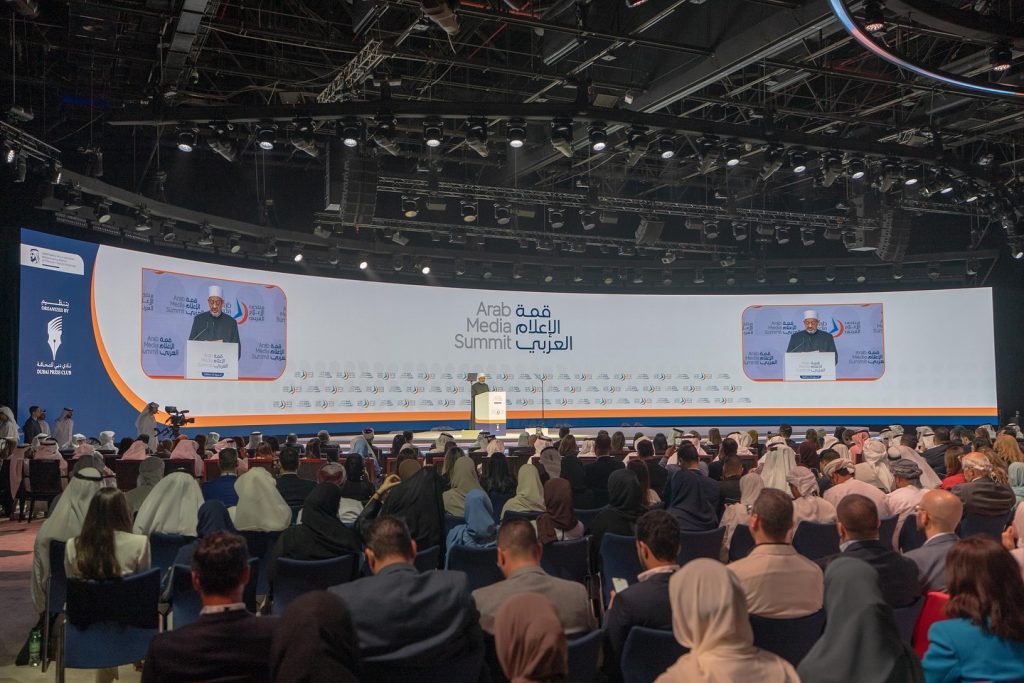
His Eminence Professor Dr. Ahmed Al-Tayeb, Grand Imam of Al-Azhar and Chairman of the Muslim Council of Elders, delivered a speech at the United Nations General Assembly on the occasion of the International Day to Combat Islamophobia. His speech, delivered on his behalf by Ambassador Osama Abdelkhalek, Egypt’s Permanent Representative to the United Nations, emphasized that this international day is the result of commendable efforts led by Muslim nations at the UN to confront a phenomenon that is both irrational and illogical, yet has become a significant threat to global peace.

In his address, the Grand Imam expressed his deep appreciation for the courageous and impartial stance of UN Secretary-General António Guterres, praising his fair and informed statements about Islam and its values. His Eminence stressed that such statements play a crucial role in combating Islamophobia, challenging misleading stereotypes, and countering extremist rhetoric that seeks to distort Islam’s true essence for political gain. He pointed out that far-right groups have often exploited these false narratives to serve narrow political agendas, fueling division and prejudice.

The Grand Imam reiterated that the word “Islam” shares its root with the word “Al-Salaam,” which means “peace” in Arabic, reflecting the very essence of this great faith—mercy, compassion, coexistence, and tolerance among all people, regardless of race, creed, language, or background. This is clearly articulated in the Glorious Quran, where Allah Almighty states: “And We have not sent you, [O Muhammad], except as a mercy to the worlds.” (The Quran, 21: 107) He emphasized that this verse encapsulates the core message of Islam—upholding fraternity, justice, and tolerance, recognizing all humans as members of one family, descended from one father and one mother.

The Grand Imam further underscored that Muslims have lived for centuries in harmony with followers of other religions, demonstrating a deep-seated belief in religious freedom, as stated in the Quranic verse: “There is no compulsion in religion.” (The Quran, 2: 256) History, he noted, stands as clear testimony that Islam is a religion of peace, founded on mutual understanding and cooperation, not conflict or division. This is not merely a claim—it is a historical reality experienced by countless societies across both the East and the West for centuries. It is a reality that has, for centuries, defined Islam and its unique message to the world.

His Eminence explained that Islamophobia, or “the irrational fear of Islam,” stems from ignorance and deliberate distortions of Islam’s principles, which are deeply rooted in peace and coexistence. He pointed out that far-right media campaigns and extremist rhetoric have, for years, sought to falsely portray Islam as a religion of violence and extremism—one of the most abhorrent fabrications in modern history. These distortions rely on flawed interpretations and the deliberate, deceitful exploitation of horrific acts of violence committed by military groups that have nothing to do with Islam. His Eminence questioned how can a religion—whose followers’ faith is incomplete unless they believe in the principle enshrined in their sacred book, where Allah addresses all of humanity, saying: “O mankind, indeed We have created you from male and female and made you into peoples and tribes that you may know one another.” (The Quran, 49: 13)—be misrepresented as one that advocates extremism, terrorism, violence, and bloodshed? Is it not only fair and just that Islam be recognized by the name Allah intended for it—a religion of understanding, tolerance, mercy, and cooperation? And should not the fear of Islam and its followers be regarded as a disorder—one that requires treatment and awareness rather than being left to spread unchecked?

His Eminence the Grand Imam emphasized that the immense challenges facing our world today—wars, conflicts, and the alarming rise of hate speech, intolerance, extremism, and discrimination—call for unity and solidarity. They compel us to build bridges of understanding upon the ruins of ignorance, arrogance, and hatred and to kindle the light of wisdom in the dark tunnels of stereotypes. Interfaith and intercultural dialogue is no longer a luxury but a necessity for the survival of humanity, rescuing it from the grips of ignorance and misunderstanding. Let our words serve as a bridge that dispels the anxieties of Islamophobia through a discourse of moderation and openness to others.

His Eminence emphasized that the immense challenges facing our world today—wars, conflicts, and the alarming rise of hate speech, intolerance, extremism, and discrimination—call for unity and solidarity. They compel us to build bridges of understanding upon the ruins of ignorance, arrogance, and hatred, and to kindle the light of wisdom in the dark tunnels of stereotypes. He stressed that interfaith and intercultural dialogue is no longer a luxury but a necessity for the survival of humanity, rescuing it from the grips of ignorance and misunderstanding. Let our words serve as a bridge that dispels the anxieties of Islamophobia through a discourse of moderation and openness to others.

He further explained that, according to their faith, Muslims are religiously obligated to believe that religious and cultural diversity is a divine decree, as Allah Almighty states: “And if your Lord had willed, He could have made mankind one community; but they will not cease to differ.” (The Quran, 11: 118). This diversity, he asserted, is a source of enrichment, not conflict, and combating Islamophobia is not a struggle for a specific group but a battle for every person whose heart beats with a love for justice.

The Grand Imam pointed out that Al-Azhar, as the historical authority of Islam and a beacon of moderation, alongside the Muslim Council of Elders, which he chairs, had long sounded the alarm about the escalating threat of Islamophobia. Their joint efforts have focused on opening avenues of dialogue between East and West, culminating in the signing of the Document on Human Fraternity in Abu Dhabi in 2019, co-signed by His Eminence the Grand Imam his brother, His Holiness Pope Francis, Pontiff of the Catholic Church. In addition, Al-Azhar and the Muslim Council of Elders have organized numerous global intellectual conferences,  trained generations of scholars and students as ambassadors of peace, and  dispatched scholarly delegations across the world as part of the international Peace Convoys that  traveled across the globe, carrying the message of Islam as a religion of mercy, rejecting all forms of hate speech and mutual fear, and advocating for human coexistence and positive integration based on dialogue and cooperation rather than conflict and division.

He continued by highlighting Al-Azhar’s efforts in combating Islamophobia, including the establishment of the Al-Azhar Observatory for Combating Extremism, which works to clarify the correct teachings of Islam for both Muslims and non-Muslims worldwide. The observatory also actively counters extremist ideologies, terrorist groups, and violent movements while monitoring acts of violence against Muslims driven by Islamophobia. Through daily monitoring of such incidents around the world, it fosters positive engagement to combat this dangerous phenomenon in affected communities. His Eminence expressed regret over the continued rise of Islamophobia, stating that despite significant efforts, the phenomenon continues to expand—fueled by far-right populist rhetoric that exploits both individual and collective vulnerabilities. This reminds us, he noted, that the struggle is a long-term one and that the challenge at hand necessitates redoubled efforts and the development of innovative mechanisms to address the complexities surrounding this issue.

The Grand Imam called for the formulation of an internationally recognized definition of Islamophobia, which would periodically identify specific terms and practices that constitute incitement, hate speech, or violence against Islam and Muslims based on their religious identity. He also advocated for the establishment of comprehensive and regularly updated databases to document racial and discriminatory crimes against Muslims, monitor laws and policies that either deepen or mitigate Islamophobia, and ultimately draft laws and legislation that curb this phenomenon while promoting values of dialogue, tolerance, and human coexistence.

Concluding his address, His Eminence stressed that the fight against Islamophobia requires sustained and practical efforts that manifest in education, dialogue, media, and legislation that safeguard human dignity—regardless of faith or background. He called upon governments and organizations to join hands in developing a monitoring and evaluation mechanism to assess the effectiveness of initiatives and interventions aimed at combating Islamophobia. Through such concerted efforts, we can build a world where justice and coexistence flourish and where the banner of human fraternity flies high in the sky.

Grand Imam of Al-Azhar in a UN Address: Islamophobia Is Irrational and Illogical, Posing a Serious Threat to Global Peace Read More »

MCE Member Dr. Qutb Sano: Contemporary Challenges Require the Unity of the Ummah and Its Reconciliation

His Excellency Dr. Qutb Mustapha Sano, member of the Muslim Council of Elders, former Minister of Religious Affairs, Minister of International Cooperation, former Diplomatic Advisor to the President of Guinea, and Secretary-General of the International Islamic Fiqh Academy in Jeddah, stressed the importance of uniting the Muslim Ummah and reconciling its people in the face of contemporary challenges that seek to divide them and impose a specific culture. 

In the third episode of the “One Ummah” program, which airs on the Muslim Council of Elders’ social media platforms throughout Ramadan, His Excellency stated that the Muslim Ummah is confronting numerous intellectual, social, political, and economic challenges. These require unified efforts to overcome. This can be achieved by raising generations capable of turning these challenges into opportunities and using modern technologies positively and beneficially for the Ummah.

The member of the Muslim Council of Elders further explained that unity within the Ummah is also about distancing itself from extremism and radicalism and upholding the values of mutual understanding and coexistence. This was the main focus of the Intra-Islamic Dialogue Conference, held in Bahrain last February, which called for the unity of the Ummah based on the shared belief that those who pray our prayer, face our Qiblah, and consume our halal food are indeed Muslims.

Dr. Qutb Sano urged the members of the Ummah to move beyond past historical conflicts in which current and future generations were not involved, citing Allah’s words: “That was a community that had already gone before. For them is what they earned and for you is what you have earned. And you will not be accountable for what they have done.” (The Quran, 2:141). This, he emphasized, is crucial for the Ummah to restore its unity, leadership, and distinctiveness.

MCE Member Dr. Qutb Sano: Contemporary Challenges Require the Unity of the Ummah and Its Reconciliation Read More »

Muslim Council of Elders Launches Ramadan Radio Program in Indonesia Featuring Prominent Scholars and Intellectuals

For the third consecutive year, the Muslim Council of Elders in Southeast Asia, headquartered in Jakarta, Indonesia, is organizing the radio program “With the Elders” on Radio Elshinta, one of Indonesia’s most renowned stations. This initiative aligns with the Council’s efforts, under the chairmanship of His Eminence Professor Dr. Ahmed Al-Tayeb, Grand Imam of Al-Azhar, to promote the values of dialogue, tolerance, and coexistence.

The program features a distinguished group of scholars and intellectuals, including His Excellency Professor Dr. Muhammad Quraish Shihab, a renowned exegete of the Qur’an, member of the Muslim Council of Elders, and former Indonesian Minister of Religious Affairs, alongside His Excellency Professor Dr. Nasaruddin Umar, the current Minister of Religious Affairs of the Republic of Indonesia. The program also features Dr. Ulil Abshar Abdalla, Deputy Chairman of Nahdlatul Ulama, Dr. Syafiq Mughni, Deputy Chairman of Muhammadiyah for International Relations, Dr. Muhammad Cholil Nafis, Chairman of the Indonesian Ulema Council, Dr. Iffatul Umniati, Professor at Syarif Hidayatullah State Islamic University Jakarta, Dr. Muhammad Zain Al-Majid, a member of the Executive Office of the Muslim Council of Elders, as well as a distinguished group of scholars and researchers.

The program focuses on human and ethical values, particularly those related to the holy month of Ramadan, while striving to promote a balanced and enlightened understanding of Islam. By fostering principles of tolerance and coexistence, it contributes to constructive dialogue and the dissemination of moderate Islamic awareness among all segments of Indonesian society.

Muslim Council of Elders Launches Ramadan Radio Program in Indonesia Featuring Prominent Scholars and Intellectuals Read More »

Muslim Council of Elders Welcomes Outcomes of the Emergency Arab Summit in Cairo, Calls for a Just and Comprehensive Solution to the Palestinian Cause

The Muslim Council of Elders, under the chairmanship of His Eminence Professor Dr. Ahmed Al-Tayeb, Grand Imam of Al-Azhar, welcomes the recommendations of the emergency Arab summit, the Summit for Palestine, hosted by the Arab Republic of Egypt. The summit affirmed the adoption of the Egyptian plan for the reconstruction of Gaza without the displacement of its residents and without compromising the fundamental principles of the Palestinian cause.

His Excellency Judge Mohamed Abdelsalam, Secretary-General of the Muslim Council of Elders, expressed the Council’s support for the final communiqué of the summit, which has resolutions reiterating that the Palestinian cause remains the central issue for the Arab world and for all nations and peoples yearning for peace. The statement also rejects all attempts to undermine the rights of the Palestinian people and supports efforts to uphold the ceasefire in its second and third phases, leading to a permanent cessation of hostilities and the withdrawal of Israeli occupation forces from the Gaza Strip, including the Salah al-Din (Philadelphia) Corridor. Furthermore, the statement stresses the need to allow the unimpeded entry of humanitarian and relief aid and to find a just resolution to the Palestinian cause.

The Council also commends the summit’s recommendations calling for the full implementation of the ceasefire agreement in Lebanon, including all its provisions. It further demands the complete withdrawal of Israeli occupation forces from Lebanon to internationally recognized borders while reaffirming support for Lebanon’s security, stability, and sovereignty. Furthermore, the Council strongly condemns Israeli attacks on the Syrian Arab Republic and calls on the international community and the United Nations Security Council to take immediate action to enforce international law, compel Israel to halt its aggression, and withdraw from all occupied Syrian territories.

The Muslim Council of Elders reiterates its support for Arab and Muslim nations’ efforts aimed at achieving a just and comprehensive resolution to the Palestinian cause, ensuring the Palestinian people’s right to establish their independent state with East Jerusalem as its capital. The Council categorically rejects any attempts to forcibly displace Palestinians from their land—whether within or beyond their territories—under any pretext, circumstance, or justification. It calls for an end to the suffering of the Palestinian people, which has persisted for more than 70 years, as a vital step towards fostering peace and stability in the region and the world.

Muslim Council of Elders Welcomes Outcomes of the Emergency Arab Summit in Cairo, Calls for a Just and Comprehensive Solution to the Palestinian Cause Read More »

For the second consecutive year, the Ramadan missions of the Muslim Council of Elders, spanning from Indonesia in the East to the US in the West, bolster religious diplomacy and promote moderation, tolerance, and balance

For the second consecutive year, as part of fulfilling its commitment to fostering peace and propagating the values of dialogue, tolerance, and coexistence, the Muslim Council of Elders, led by His Eminence Prof. Dr. Ahmed Al-Tayeb, Grand Imam of Al-Azhar, has deployed numerous religious convoys across the globe. These initiatives during the holy month of Ramadan aim to promote moderation, balance, and enlightened Islamic thought.

These convoys involved over 32 Quran reciters and preachers who were sent to nine countries including Spain, Italy, Germany, Kazakhstan, Russia, Indonesia, Malaysia, Pakistan, and the United States. Their responsibilities include leading prayers, reciting the Holy Quran, and conducting a range of lectures, sermons, and religious seminars. The objective is to strengthen connections with Muslims worldwide, enhance their religious awareness, encourage their positive integration within their societies, and shield them from extremist ideologies and the threats posed by violent and terrorist groups.

 
The Secretary-General of the Muslim Council of Elders, His Excellency Judge Mohamed Abdelsalam, noted that in response to the significant success of these missions last year, efforts were made to increase the number of envoys this year. Additionally, recognizing the important role of women, for the first time, several female preachers were dispatched to enhance engagement with Muslim women and provide them with accurate religious information and values, aiming to nurture generations equipped to promote tolerance, coexistence, and peace.

The Muslim Council of Elders is dedicated through its varied programs, activities, and initiatives to connecting Muslims with the foundational aspects of their faith and creed, fostering a correct understanding of Islam, and preserving their Islamic identity. This includes deepening their grasp of Islamic religious values and traditions and how these can be applied in daily life. The Council also emphasizes educating on ethical strategies to address challenges faced by Muslims worldwide and combating all forms of bigotry, extremism, racism, discrimination, and Islamophobia.

For the second consecutive year, the Ramadan missions of the Muslim Council of Elders, spanning from Indonesia in the East to the US in the West, bolster religious diplomacy and promote moderation, tolerance, and balance Read More »