
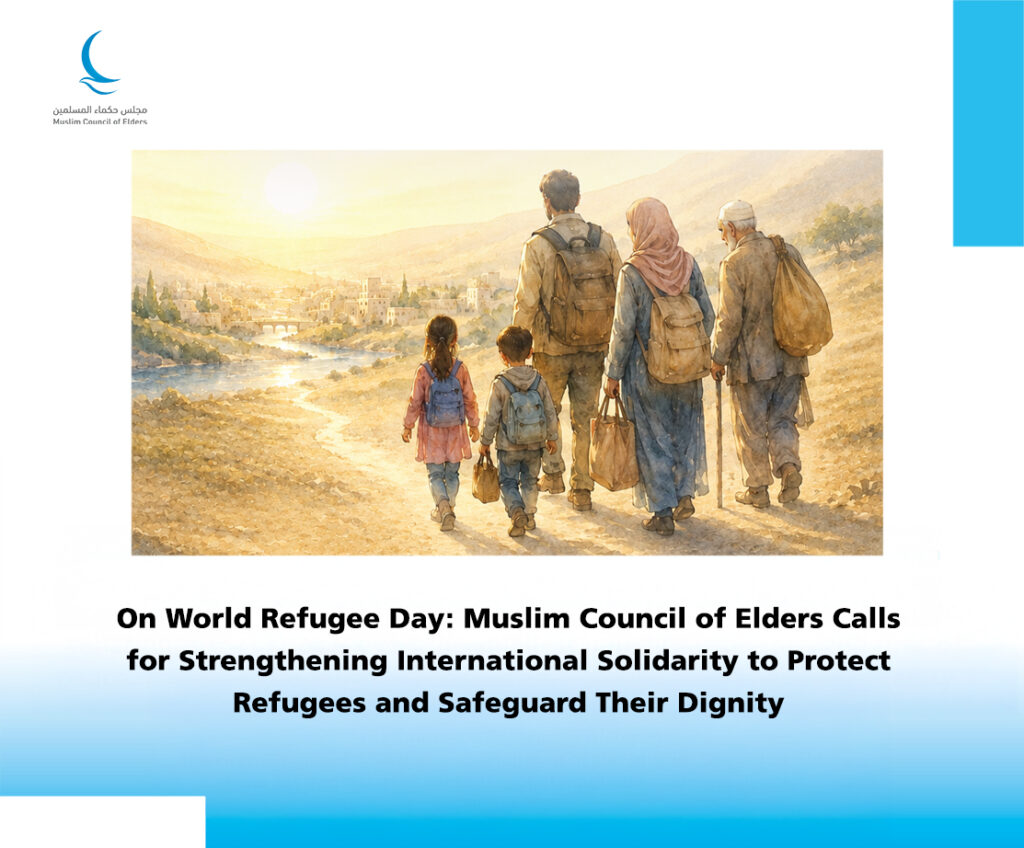
The Muslim Council of Elders, under the chairmanship of His Eminence Professor Dr. Ahmed Al-Tayeb, Grand Imam of Al-Azhar, affirmed refugees represent one of the most pressing humanitarian challenges facing the world and requires concerted international efforts to protect the millions of people who have been forced by wars, conflicts, disasters, and crises to leave their homelands in search of safety and security.
In a statement issued on World Refugee Day, observed annually on June 20, the Council stressed that human dignity is an inherent right that must not be violated under any circumstances. It emphasized that protecting refugees, caring for them, and ensuring dignified living conditions constitute a humanitarian, moral, and legal obligation, grounded in the principles advocated by Islam, all divine religions, and shared human values—foremost among them compassion, solidarity, mutual support, and respect for human dignity.
The Muslim Council of Elders called on the international community to strengthen joint efforts to address the root causes of displacement and refuge, foremost among them armed conflicts, violence, extremism, and human rights violations. It also urged support for peaceful solutions to crises, thereby enabling refugees to return safely and voluntarily to their homelands and contributing to the achievement of security, stability, and sustainable development for all societies.
The Council further affirmed that the Document on Human Fraternity—signed in Abu Dhabi in 2019 by His Eminence the Grand Imam Dr. Ahmed Al-Tayeb, Chairman of the Muslim Council of Elders, and the late Pope Francis, former Head of the Catholic Church—calls for alleviating the suffering of refugees, marginalized groups, the poor, the needy, and those who have lost their homes and shelter, without discrimination or exclusion. This stems from the belief that all human beings are brothers and sisters in humanity, sharing common rights and responsibilities.
The Muslim Council of Elders also commended the humanitarian initiatives and efforts undertaken by nations, institutions, international and relief organizations, and the United Nations Refugee Agency in supporting refugees and alleviating their suffering. It emphasized that true humanitarian solidarity goes beyond merely providing basic needs; it extends to empowering refugees through access to education, healthcare, employment, and a dignified life—ensuring their humanity is preserved and safeguarding the future of coming generations.