NEWS

Grand Imam of Al-Azhar and Chairman of the Muslim Council of Elders Meets Pakistan’s Chairman Joint Chiefs of Staff, Emphasizing the Urgent Need for Islamic Unity

Pakistan’s Chairman Joint Chiefs of Staff Invites Grand Imam of Al-Azhar to Visit Pakistan

Pakistan’s Chairman Joint Chiefs of Staff: The Grand Imam of Al-Azhar Is a Symbol of Islamic Moderation, Inspiring Hope Among Muslims Worldwide with His Courageous Stances

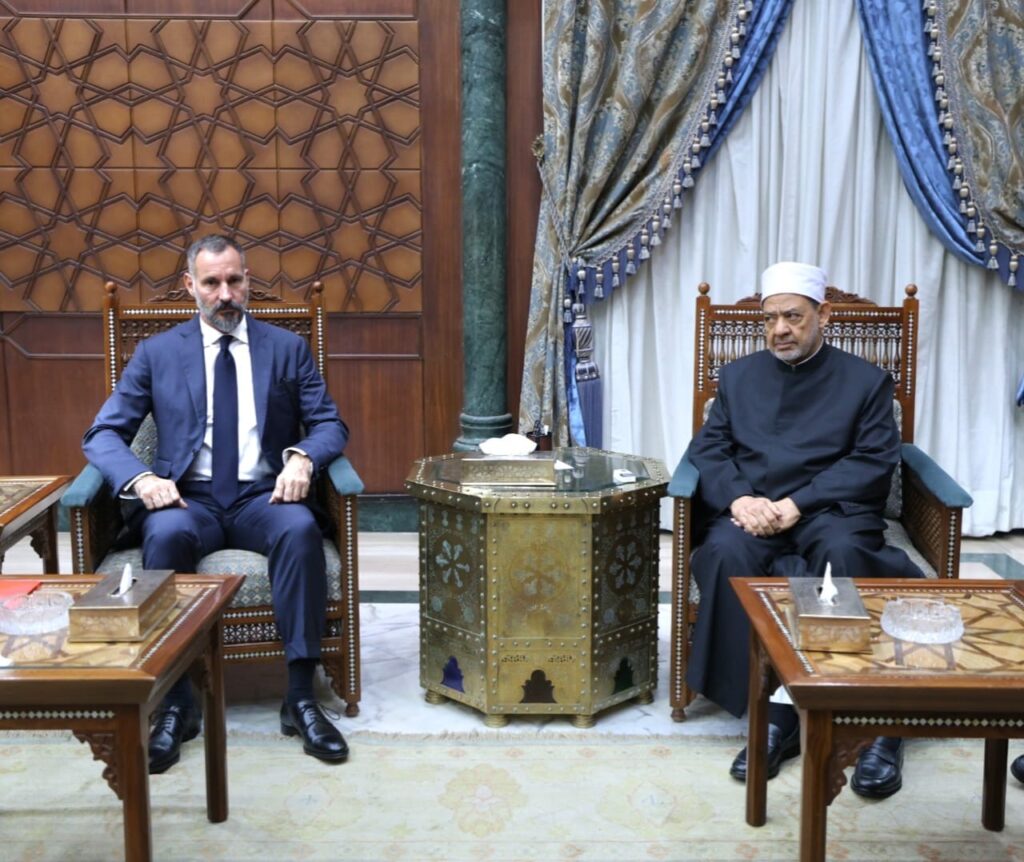
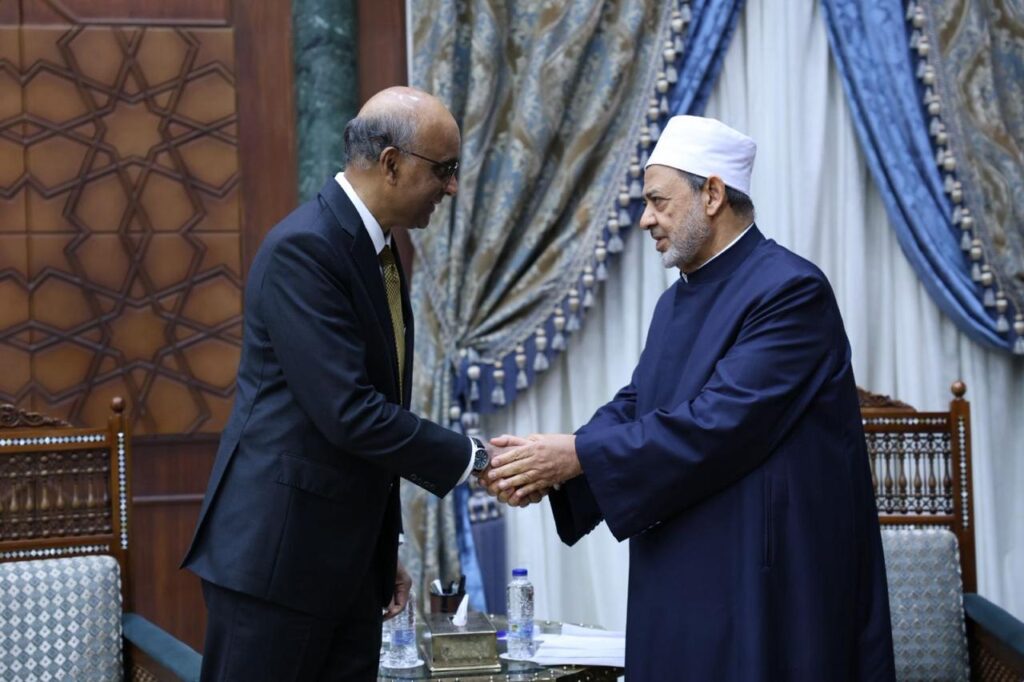
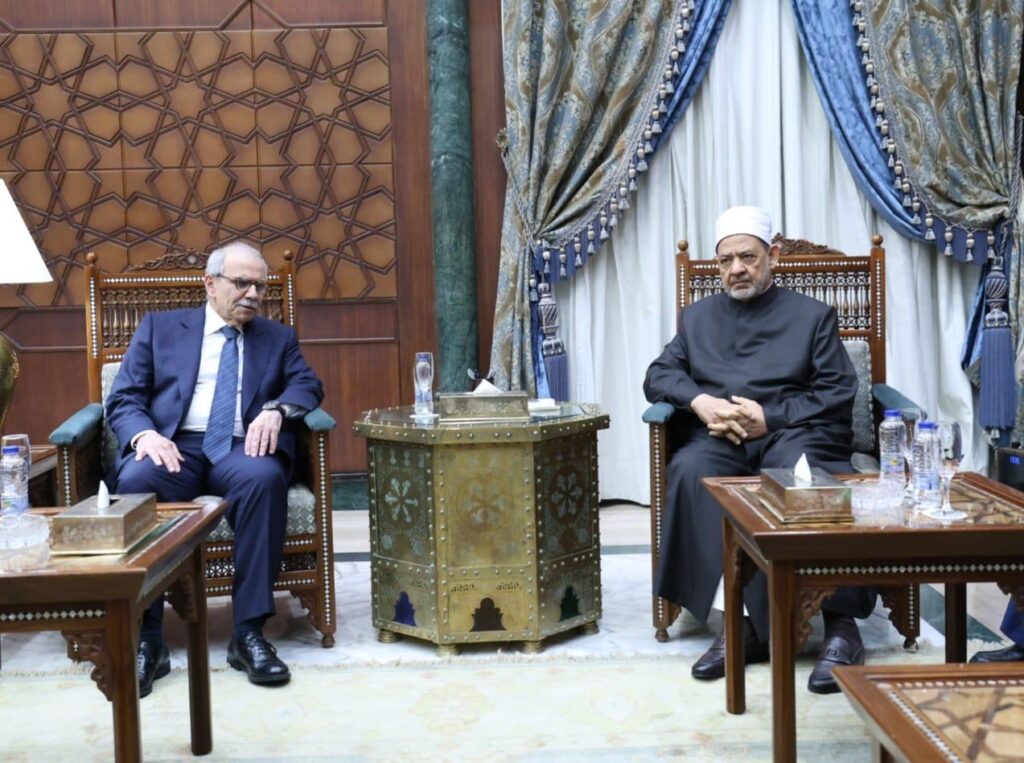
His Eminence Dr. Ahmed Al-Tayeb, the Grand Imam of Al-Azhar and Chairman of the Muslim Council of Elders, welcomed General Sahir Shamshad Mirza, Chairman of the Joint Chiefs of Staff Committee of the Islamic Republic of Pakistan.

During the meeting, His Eminence highlighted the deep ties with the Islamic Republic of Pakistan, noting that Pakistan exemplifies the progress and strength of Islamic intellectual thought. He expressed a commitment to strengthening academic and cultural cooperation with Pakistan through initiatives such as establishing centers to teach the Arabic language, enabling Pakistan people to learn the language of the Holy Qur’an, increasing scholarship opportunities, and training Pakistani imams.

His Eminence emphasized that the time has come for the Islamic world to unite and rally around the Palestinian cause, which has become a global concern. He stated, “There can be no stability in the Middle East, or indeed the world, without a just resolution to the Palestinian issue that ensures the Palestinian people’s full rights to establish an independent state with Jerusalem as its capital.”

General Sahir Shamshad Mirza expressed his delight at meeting His Eminence, conveying the appreciation of Pakistan’s leadership and people for the Grand Imam. He remarked, “Meeting you is a great honor, as you are a symbol of Islamic moderation, inspiring hope among Muslims worldwide with your courageous stances.” He added that the people of Pakistan trust Al-Azhar’s approach, closely follow its positions with deep respect, and support its vision on issues affecting the Islamic world.

At the conclusion of the meeting, the Chairman of the Joint Chiefs of Staff extended an official invitation to His Eminence Dr. Ahmed Al-Tayeb to visit Pakistan, emphasizing the people of Pakistan’s eager anticipation of this visit. His Eminence warmly welcomed the invitation, expressing his intent to accept it at the earliest opportunity.

Grand Imam of Al-Azhar and Chairman of the Muslim Council of Elders Meets Pakistan’s Chairman Joint Chiefs of Staff, Emphasizing the Urgent Need for Islamic Unity Read More »

Muslim Council of Elders Participates in Alexandria International Book Fair with Dedicated Pavilion

The Muslim Council of Elders is participating with a dedicated pavilion at the 20th edition of the Alexandria International Book Fair, which officially opened today, Monday. The event is jointly organized by the Bibliotheca Alexandrina, the Egyptian General Book Organization, the Egyptian Publishers Association, and the Arab Publishers Association, with wide participation from cultural institutions and publishing houses from across the Arab world and beyond.

The fair was inaugurated by Prof. Ahmed Zayed, Director of the Bibliotheca Alexandrina, in the presence of several prominent academic and diplomatic figures, including Dr. Mohamed Abdel Daim El-Gendy, Secretary-General of the Islamic Research Academy. Both visited the pavilion of the Muslim Council of Elders and reviewed the Council’s latest publications in the fields of interfaith dialogue, Islamic thought renewal, promotion of societal peace, and awareness-raising around the values of Islamic moderation.

Prof. Ahmed Zayed praised the Council’s publications, describing them as a valuable addition to contemporary cultural and religious discourse. Dr. El-Gendy likewise commended the important role the Council plays in countering extremism and protecting young people from insular ideologies, applauding its commitment to enlightened thinking and the reinforcement of human fraternity values.

The participation of the Muslim Council of Elders reflects its ongoing efforts to promote a culture of dialogue and tolerance, and to contribute intellectually and morally to major cultural forums. This presence aligns with the Council’s mission to advance shared human values and to empower scholars and thinkers in building more informed and cohesive societies.

It is worth noting that the Alexandria International Book Fair will run until 21 July and features more than 78 Egyptian and Arab publishing houses, alongside over 215 cultural and artistic events, with the participation of nearly 800 intellectuals, writers, and artists.

Muslim Council of Elders Participates in Alexandria International Book Fair with Dedicated Pavilion Read More »

Muslim Council of Elders Organizes International Roundtable on Spiritual Diplomacy and Religious Heritage Preservation in Kazakhstan

The Muslim Council of Elders – Central Asia, in cooperation with the International Center for Interfaith and Intercivilizational Dialogue and the Egyptian University of Islamic Culture “Nur-Mubarak,” organized an international roundtable titled “Spiritual Diplomacy and the Preservation of the Sacred Heritage of World and Traditional Religions” on June 25–26 in Almaty, Kazakhstan.

The event saw distinguished participation from prominent scholars, religious leaders, experts, and intellectuals in order to explore the vital role of ancient manuscripts and religious-cultural heritage in the modern era. Discussions focused on developing effective strategies for restoring rare manuscripts and promoting spiritual diplomacy as a bridge for interfaith understanding. A central theme was a bold initiative to restore a rare 12th-century manuscript of the Holy Qur’an.

Among the notable participants were Dr. Darhan Kydyrali, Chief Coordinator of the Muslim Council of Elders – Central Asia; Bauyrzhan Bakirov, Deputy Chairman of the International Center for Interfaith and Intercivilizational Dialogue; Dr. Ahmed Hussein Mohammed Ibrahim, Rector of Nur-Mubarak University; Dr. Eleonore Cellard, Associate Researcher at INALCO in France; Dr. Ashirbek Muminov, Central Asia Advisor to IRCICA; and Dr. Rustam Jabborov, Scientific Consultant at the World Society for the Study, Preservation and Promotion of the Cultural Heritage of Uzbekistan (WOSCU).

The first day featured presentations under the theme *“Spiritual Diplomacy and the Role of Religions in Building Mutual Trust,”* moderated by Dr. Ykhtiyar Paltore, Director of the Department of Science and Innovation at Nur-Mubarak University. Restoration experts held specialized workshops and seminars, while a scholar from Al-Azhar University led a guided tour of the Islamic manuscript collection, showcasing the rare 12th-century Qur’an.

The second day focused on mechanisms for preserving rare Islamic manuscripts and the latest academic approaches to studying Islamic heritage. The roundtable concluded with the adoption of a joint declaration affirming the steadfast commitment of participating institutions to protect sacred heritage and promote spiritual diplomacy as a foundation for understanding and coexistence among cultures and religions.

This initiative is part of the Muslim Council of Elders’ broader efforts to promote spiritual diplomacy, foster dialogue, tolerance, and peaceful coexistence among followers of different religions and cultures, and contribute to spreading values of peace, understanding, and stability.

Muslim Council of Elders Organizes International Roundtable on Spiritual Diplomacy and Religious Heritage Preservation in Kazakhstan Read More »

For the Third Consecutive Year: Muslim Council of Elders Receives Best International Pavilion Award at Jakarta Islamic Book Fair

The Muslim Council of Elders has been awarded the “Best International Pavilion” prize at the 2025 Islamic Book Fair in Jakarta, the capital of Indonesia, marking its third consecutive year receiving this honor. The award comes in recognition of the Council’s continued efforts to advance the values of dialogue and human coexistence through its distinguished cultural participation.

The recognition reflects the pavilion’s strong appeal to visitors and participants from all walks of life, thanks to its interactive activities, cultural programs, and intellectual seminars that helped foster a shared human discourse. The pavilion also showcased a wide range of scholarly and cultural publications that embody the Council’s mission to support global peace and dialogue.

This year, the Muslim Council of Elders’ pavilion at the Jakarta Islamic Book Fair featured more than 250 diverse publications addressing issues of peace, coexistence, identity, and citizenship. The collection focused particularly on themes of human fraternity, Islamic unity, and the role of youth in peacebuilding, along with titles aimed at promoting a moderate and enlightened understanding of Islam, correcting misconceptions, and countering extremist rhetoric, hate speech, intolerance, and Islamophobia.

This award reflects the ongoing international recognition of the crucial role played by the Muslim Council of Elders, under the chairmanship of His Eminence Professor Dr. Ahmed Al-Tayeb, Grand Imam of Al-Azhar, in fostering a culture of dialogue, tolerance, and human fraternity.

For the Third Consecutive Year: Muslim Council of Elders Receives Best International Pavilion Award at Jakarta Islamic Book Fair Read More »

Seminar on “The Call of the People of Qiblah” Hosted by the Muslim Council of Elders at the 2025 Islamic Book Fair in Jakarta

The Muslim Council of Elders held a thought-provoking seminar titled “The Call for the People of Qiblah and Efforts to Strengthen Intra-Islamic Dialogue” as part of its participation in the 2025 Islamic Book Fair in Jakarta, Indonesia. The event drew significant interest and active engagement from both visitors and participants.

The seminar featured distinguished speakers including Prof. Dr. Syafiq Mughni, Vice President of Muhammadiyah; Dr. Muhammad Zain Al-Majid, Member of the Executive Office of the Muslim Council of Elders; and Ms. Alissa Qotrunnada Wahid, Coordinator of the Gusdurian Network Indonesia (GNI). 

Opening the seminar, Prof. Dr. Syafiq Mughni stressed the critical importance of intra-Islamic dialogue in light of the growing challenges facing the Muslim world, both internally and externally. He noted that these challenges are a true test for the Ummah, which the Qur’an describes as “You are the best community ever raised for humanity” [3:110]. Achieving this status, he explained, requires both knowledge and moral values, emphasizing that scientific advancement is incomplete without a strong ethical foundation. 

He remarked, “The key to the revival of the Ummah lies in blending modern science with noble character. Morality is the backbone of any nation—when it collapses, the nation follows.” He also called for greater commitment to moderation and balance in addressing differences, stating that the advancement of knowledge and ethics together is what protects the Ummah from falling into extremism and takfir (excommunication).

Dr. Muhammad Zain Al-Majid, in turn, reflected on the significance of the Intra-Islamic Dialogue Conference held in February 2025. Jointly organized by the Muslim Council of Elders, Al-Azhar, and Bahrain’s Supreme Council for Islamic Affairs, and hosted by the Kingdom of Bahrain, the conference culminated in “The Call for the People of Qiblah”. He described the declaration as a sincere appeal to revive the spirit of Islamic unity, rooted in a religious imperative affirmed by Qur’anic teachings and a civilizational necessity that urges the Ummah to build its future through dialogue and shared values, rather than division.

In her remarks, Ms. Alissa Wahid affirmed that Indonesia’s cultural and religious diversity has made its practice of Islam a model of openness and compassion. She noted that Indonesian society is inherently multiethnic and called for the reinforcement of fraternal values as a means to counter hate speech and insularity.

Seminar on “The Call of the People of Qiblah” Hosted by the Muslim Council of Elders at the 2025 Islamic Book Fair in Jakarta Read More »

Muslim Council of Elders Highlights the Ethical and Moral Dimensions of Artificial Intelligence at Jakarta Islamic Book Fair

As part of its active participation in the 2025 Islamic Book Fair (IBF) in Jakarta, the capital of Indonesia, the Muslim Council of Elders organized an intellectual seminar titled “Promoting Digital Awareness and the Ethics of Artificial Intelligence” during the fair’s opening day. The seminar witnessed notable attendance, particularly from youth and individuals interested in the intersection of modern technology with human and religious values.

The seminar began with a keynote address by His Excellency Prof. Dr. Muhammad Quraish Shihab, a renowned exegete of the Quran, former Indonesian Minister of Religious Affairs, and member of the Muslim Council of Elders. In his remarks, Prof. Shihab emphasized that Islam does not separate knowledge from ethics, noting that the first revealed verse—“Read in the name of your Lord”—establishes a foundational link between science and moral responsibility. He warned that without a grounding in spiritual and human values, science and technology, including artificial intelligence, could become tools of misguidance rather than enlightenment. He further cautioned against relying on AI for issuing legal or religious verdicts, as the data it relies on may stem from cultural and religious contexts that do not align with Islamic traditions. Prof. Shihab identified three core ethical principles that must govern the use of modern technology: human dignity, public benefit, and moral accountability.

Dr. Rezzy Eko Caraka, a leading researcher at the National Research and Innovation Agency, presented on the practical dimensions of artificial intelligence applications. He stressed that modern technologies should remain tools that serve humanity, not replacements for human decision-making or thought. Dr. Caraka highlighted several ethical challenges associated with AI, including violations of privacy, excessive cognitive reliance on technology, and the environmental impact of server operations. He called for fostering a culture of responsible and mindful technology use and advocated for the development of ethical and intellectual frameworks grounded in religious values.

In a remarkable intervention, His Excellency Prof. Dr. Pratikno, Coordinating Minister for Human Development and Cultural Affairs of the Republic of Indonesia, underlined the need for comprehensive digital sovereignty to confront the challenges of artificial intelligence—starting with the development of localized content. He warned that the absence of local content in AI datasets could distort religious concepts and erode cultural identity. Prof. Dr. Pratikno urged institutions like the Muslim Council of Elders to lead efforts in developing AI models that reflect the particularity of Islamic values and cultural authenticity.

Concluding the seminar, participants agreed that while AI represents an unprecedented technological revolution, its adoption must remain within a robust ethical framework—one that respects religious and cultural specificities, preserves human dignity, and serves the greater good.

Muslim Council of Elders Highlights the Ethical and Moral Dimensions of Artificial Intelligence at Jakarta Islamic Book Fair Read More »

Grand Imam of Al-Azhar and Chairman of the Muslim Council of Elders Meets Prime Minister Serbia to Discuss Strengthening Academic and Religious Cooperation for Serbia’s Muslim Community

His Eminence Dr. Ahmed Al-Tayeb, Grand Imam of Al-Azhar and Chairman of the Muslim Council of Elders has met with Dr. Đuro Macut, Prime Minister of Serbia, to discuss ways to enhance academic and religious cooperation in support of Serbia’s Muslim community.

His Eminence affirmed Al-Azhar’s commitment to addressing the needs of Serbian Muslims by training imams and preachers, equipping them to tackle contemporary intellectual and religious challenges. These efforts focus on promoting human fraternity, fostering positive coexistence, facilitating the integration of Muslims into Western societies, clarifying women’s rights in Islam, countering extremist ideologies with reason and logic, and establishing an Arabic language center in Serbia to serve the Muslim community and teach the language of the Holy Qur’an.

His Eminence also emphasized that peace and mutual understanding should serve as the foundation for coexistence among all people. He further urged for efforts to instill patriotism in youth and to embrace diversity and differences, which he described as a divinely ordained universal principle essential for humanity’s continuity.

For his part, the Prime Minister of Serbia expressed his pleasure at meeting His Eminence, highlighting Serbia’s dedication to strengthening ties with Islamic countries and institutions. He also commended the Grand Imam of Al-Azhar and Chairman of the Muslim Council of Elders for his efforts in promoting dialogue, tolerance, peaceful coexistence, and human fraternity.

Grand Imam of Al-Azhar and Chairman of the Muslim Council of Elders Meets Prime Minister Serbia to Discuss Strengthening Academic and Religious Cooperation for Serbia’s Muslim Community Read More »

For the fourth consecutive year, the Muslim Council of Elders showcases its latest intellectual and cultural publications at a dedicated pavilion in the Jakarta Islamic Book Fair

The Muslim Council of Elders is taking part in the 23rd Jakarta Islamic Book Fair, held at the Jakarta Convention Center (JCC) from June 18 to 22, 2025. Marking its fourth consecutive year of participation, the Council is showcasing its work through a dedicated and prominent pavilion—one of the fair’s key attractions. This presence reflects the Council’s ongoing commitment to promoting a culture of peace and coexistence, advancing the principles of moderate Islam, and deepening its cultural footprint in Southeast Asia.

This year, the Council is presenting over 250 intellectual and cultural titles, including a selection of its latest 2025 releases by Al Hokama Publishing. The publications explore key issues such as peacebuilding, coexistence, and identity pluralism, with notable titles including: “Religion and the Nations of Greater Asia: Managing Religious and Ethnic Pluralism in China and India,” “Peace in Africa: Studies and Perspectives on Enhancing Stability and Development,” “The Making of International Peace: Drawing from Shared Contexts,” and “International Peace: Shared Values and Institutional Concepts,” authored by a group of researchers from the Al Hokama Center for Peace Research. 
 
 The pavilion further highlights over 30 works by His Eminence Prof. Dr. Ahmed Al-Tayeb, Grand Imam of Al-Azhar and Chairman of the Muslim Council of Elders. These works aim to present the true spirit of Islam and its rich intellectual and philosophical heritage. Titles include “Al-Qawl al-Tayyib,” “From My Old Notebooks,” “Ahl al-Sunnah wa al-Jama’ah,” “Insights into the Thought of Imam Al-Ash‘ari,” and “A Discussion on Peace.” Additionally, the book “Islam and the West: An Approach to the Causes of Confrontation and a Survey of the Conditions for Intercultural Exchange” by Dr. Mohamed Elbenayadi, “The Quran’s Discourse on Humanity” by Sheikh Ali Mohamed Hassan Al-Amari, “Imam al-Haramayn and His Influence on the Development of the Ash’ari School” by Dr. Ali Mohamed Jaber, and “Islamic Principles on Family Planning” by Abu Al-Wafa Al-Maraghi will also be featured.

 The Council is also showcasing a selection of significant works by its members and prominent intellectuals. Among the highlights are: “Love in the Holy Qur’an” by His Royal Highness Prince Ghazi bin Muhammad, “The Grand Imam and the Pope: A Thorny Path – A Testimony on the Birth of the Document on Human Fraternity” by Judge Mohamed Abdelsalam, Secretary-General of the Muslim Council of Elders, “Principles of Understanding and Mutual Comprehension in Thought and Language” by Dr. Mostafa Benhamza, “Muslims at a Crossroads” by Dr. Mahmoud Hamdi Zakzouk, “Dimensions of Mutual Knowledge in Morocco and Al-Andalus” by Dr. Jaafar bin Al-Hajj Al-Salami, and “Studies in Thematic Parallels in Qur’anic Narratives: A Comparative and Analytical Approach” by Dr. Abdelghani Al-Rajihi.

As part of its commitment to expanding its cultural impact and reaching Indonesian audiences, the Council is offering a collection of publications translated into Bahasa Indonesia. Notable titles include: “Al Qawl Al-Tayeb,” “From My Old Notebooks,” “Reflections on the Thought of Imam Al-Ash’ari,” Ahl al-Sunnah wal-Jama‘ah: Who Are We?,” “The Essentials of Islam,” “and Social Ethics in Islam” by Sheikh Abu Al-Wafa Al-Maraghi, as well as “Correcting Misconceptions” by Sheikh Muhammad Abu Zahra. In addition, the Council is presenting several works translated from other languages, such as: “The Voice of Change,” “Shared Global Values and the Making of International Peace,” “Confronting Islamophobia in Europe,” “Islam and Good Governance” by Prof. Muqtedar Khan, and “Islam, the West, and Tolerance: Conceiving Coexistence” by Dr. Aaron Tyler.


The Council’s participation in this year’s fair extends to a series of high-level intellectual seminars featuring a distinguished group of scholars and thinkers. Among the highlights is a seminar titled “Promoting Dialogue Among the Components of the Muslim Ummah,” featuring Dr. Muhammad Zainul Majdi, member of the Council’s Executive Committee; Prof. Dr. Syafiq Mughni, Vice President of the Muhammadiyah; and Ms. Alissa Wahid, Coordinator of the Gusdurian Network Indonesia (GNI). Another seminar, titled “The Importance of Strengthening Digital Sovereignty and the Ethics of Artificial Intelligence in the Indonesian Context,” will feature Prof. Dr. Muhammad Quraish Shihab, member of the Muslim Council of Elders and former Indonesian Minister of Religious Affairs; Prof. Dr. Pratikno, Minister of Human Development and Culture; and Dr. Rezzy Eko Caraka, researcher at BRIN and visiting professor in Taiwan.

In its commitment to engaging diverse segments of society, the Council is also hosting a variety of interactive workshops at its pavilion. These include “AI and Coexistence for Children” and a screenwriting workshop on “Human Fraternity and Coexistence,” designed for young creators and content developers.

The Council’s pavilion has been awarded “Best Pavilion” at the Jakarta Islamic Book Fair for three consecutive years—an acknowledgment of the richness of its content, the diversity of its programs, and the high level of visitor engagement. The Muslim Council of Elders warmly invites the public to visit its pavilion in Halls A & B at the Jakarta Convention Center to explore its latest publications and take part in its diverse activities, all of which reflect its mission to promote peace, mutual understanding, and dialogue among nations and cultures.

For the fourth consecutive year, the Muslim Council of Elders showcases its latest intellectual and cultural publications at a dedicated pavilion in the Jakarta Islamic Book Fair Read More »

On the World Day Against Child Labour – Muslim Council of Elders: Protecting Children and Preserving Their Childhood from Exploitation and Suffering Is a Religious, Moral, and Humanitarian Duty

The Muslim Council of Elders, under the chairmanship of His Eminence Dr. Ahmed Al-Tayeb, Grand Imam of Al-Azhar, affirms that safeguarding children and preserving their childhood from exploitation and suffering is a religious, moral, and profound humanitarian obligation shared by societies, institutions, and individuals alike.

On the World Day Against Child Labour, observed annually on June 12, the Council declares that addressing child exploitation and forced labor is a collective responsibility and demands unified efforts to develop sound policies, enact stringent laws, ensure social protection and quality education, foster a culture of societal responsibility toward children, and intensify initiatives to combat poverty and ignorance, which rank among the leading causes of child labor. The Council praises the programs and initiatives by various nation states and institutions that empower families and promote education, thereby helping curb this grave issue and fostering a safe environment for every child’s healthy development.

The Council’s statement also emphasizes that in Islam, a child is a dignified being entitled to care, education, protection, and growth in a secure and nurturing environment. Which is proven by the Prophetic Hadith, “Each of you is a shepherd, and each is responsible for their flock” (narrated by Al-Bukhari), which powerfully highlights adults’ duty to nurture children, shield them from harm, and protect them from the burdens of poverty or deprivation, ensuring their rightful childhood remains intact. Furthermore, the Council underscores the critical role of religious, educational, and media institutions in raising awareness and educating communities to combat this issue, actively shaping a collective consciousness that prioritizes child protection which is especially vital in today’s world, where wars and conflicts intensify the suffering of countless innocent children.

The Document on Human Fraternity, which was co-signed in 2019 in Abu Dhabi by His Eminence the Grand Imam of Al-Azhar, Chairman of the Muslim Council of Elders, alongside the late Pope Francis, Pontiff of the Catholic Church at the time, asserts that children’s fundamental rights to family upbringing, nutrition, education, and care constitute a moral duty and responsibility for families and society. These rights must be upheld, defended, and guaranteed for every child worldwide, without exception. Additionally, any practice that undermines their dignity or violates their rights must be condemned, and vigilance is required to address the risks and violations they face in any form.

On the World Day Against Child Labour – Muslim Council of Elders: Protecting Children and Preserving Their Childhood from Exploitation and Suffering Is a Religious, Moral, and Humanitarian Duty Read More »

Muslim Council of Elders Participates in Egypt’s Local Conference of Youth on Climate Change

The Muslim Council of Elders participated in the Local Conference of Youth on Climate Change (LCOY Egypt 2025), organized by the Mediterranean Youth Foundation and hosted at the Bibliotheca Alexandrina. The event drew active participation from numerous institutions, as well as official, academic, and religious figures.
 
In a recorded address broadcast during the opening session of the conference, His Excellency Judge Mohamed Abdelsalam, Secretary-General of the Muslim Council of Elders, emphasized that climate change is a fundamental and existential issue that is closely linked to achieving social justice. He noted that it is also a humanitarian concern that threatens humanity and the shared planet we all inhabit. He explained that the Muslim Council of Elders has embraced this cause on multiple fronts, including its participation in several United Nations Climate Change Conferences, most recently COP28 in Dubai and COP29 in Azerbaijan. At these conferences, the Council launched a landmark initiative—the Faith Pavilion—which aimed to strengthen the role of religious leaders and figures in addressing the climate challenge.

Judge Abdelsalam further noted that the Council also organized the Global Summit of Religious Leaders for Climate, which resulted in the issuance of the document titled The Call of Conscience: The Abu Dhabi Joint Declaration on Climate.” This statement was signed by 30 of the world’s most prominent religious leaders, including His Eminence Professor Dr. Ahmed Al-Tayeb, Grand Imam of Al-Azhar, and the late Pope Francis, former Pontiff of the Catholic Church. He also highlighted that, in recognition of the importance of youth engagement, the Council organized a climate-themed youth competition that attracted more than 50 participants from 11 countries around the world, aimed at involving youth in this global challenge.

The Secretary-General commended the LCOY Egypt 2025 initiative, particularly as it was launched by Egyptian civil society. He expressed his confidence that such efforts would contribute positively to empowering youth to play a greater role in confronting climate change. He reaffirmed the Muslim Council of Elders’ support for the initiative, stemming from its firm belief in the vital role of youth in addressing contemporary challenges and in promoting peace, coexistence, and human fraternity.

It is worth noting that LCOY Egypt 2025 is being organized for the first time under the leadership of Egyptian civil society, across 11 governorates from May to November 2025, and concurrently in 110 countries around the world. The conference will culminate in a policy paper, which will be submitted annually in November to the Secretary-General of the United Nations. Recorded remarks at the opening session were delivered by H.E. Ambassador Dr. Badr Abdelatty, Egypt’s Minister of Foreign Affairs and Immigration; Dr. Alaa Farouk, Minister of Agriculture and Land Reclamation; Dr. Mahmoud Seddiq, Vice President of Al-Azhar University; Dr. Heba Labib, Vice President of Nile University for Innovation and Entrepreneurship; and Dr. Ne’ma Sa’eed, Representative of the World Health Organization in Egypt. The opening session also featured in-person participation from a large number of prominent figures from official, academic, religious, and youth leaders.

Muslim Council of Elders Participates in Egypt’s Local Conference of Youth on Climate Change Read More »