Grand Imam of Al-Azhar and Chairman of the Muslim Council of Elders Participates in the Opening of the“Daring Peace” Summit in Rome in the Presence of the President of Italy, Queen of Belgium, and Religious Leaders from Around the World
Grand Imam of Al-Azhar and Chairman of the Muslim Council of Elders: The Resilience of Human Conscience in the Face of Massacres Is Humanity’s Last Hope
Grand Imam of Al-Azhar: I Commend the HonorableStances of Free People Around the World Whose Voices Rose in Condemnation of the Gaza Massacres That Broke the Heart of Humanity
Grand Imam of Al-Azhar: There Can Be No Peace in the Middle East Without the Establishment of an Independent Palestinian State with Jerusalem as Its Capital
Grand Imam of Al-Azhar: I Salute the Nations That Recognized the State of Palestine; Their Courage Embodies the Awakening of Human Conscience
Grand Imam of Al-Azhar: Wretched Is a Freedom That Denies the Weak Their Sacred Right to Life on Their Land
Grand Imam of Al-Azhar: The World Must Subject Technology to the Values of Justice and Human Conscience
Grand Imam of Al-Azhar: The Document on Human Fraternity, Which I Co-signed with My Late Brother Pope Francis, Embodied the Conscience of the Free World
Grand Imam of Al-Azhar: We Are Working with the Holy See to Issue a Global Charter for the Ethics of Artificial Intelligence
Grand Imam of Al-Azhar: No Peace Without Justice,and No Justice Amid the Domination of the Arms Industry
Grand Imam of Al-Azhar: Senseless Wars Have Exposed the Collapse of the Global Ethical Order
Grand Imam of Al-Azhar: The World Is Collapsing Morally When Values Are Severed from Faith, and Racism and Tyranny Have Fatally Wounded International Justice
Grand Imam of Al-Azhar: Peace Cannot Be Built on the Ruins of Injustice, and Global Crises Have Revealed the Bankruptcy of Modern Human Conscience
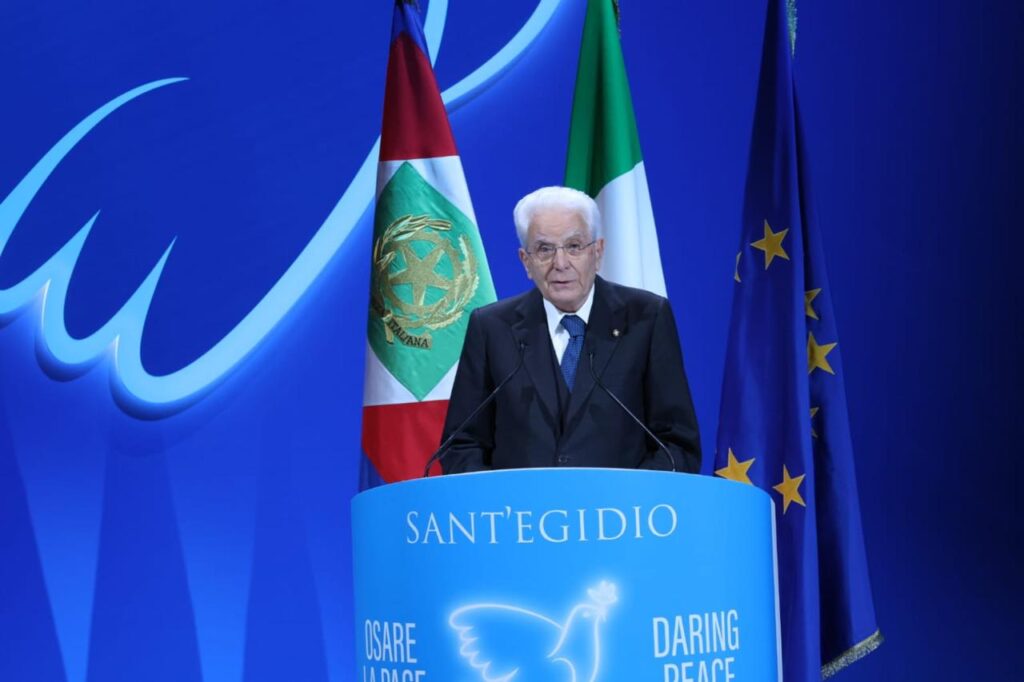
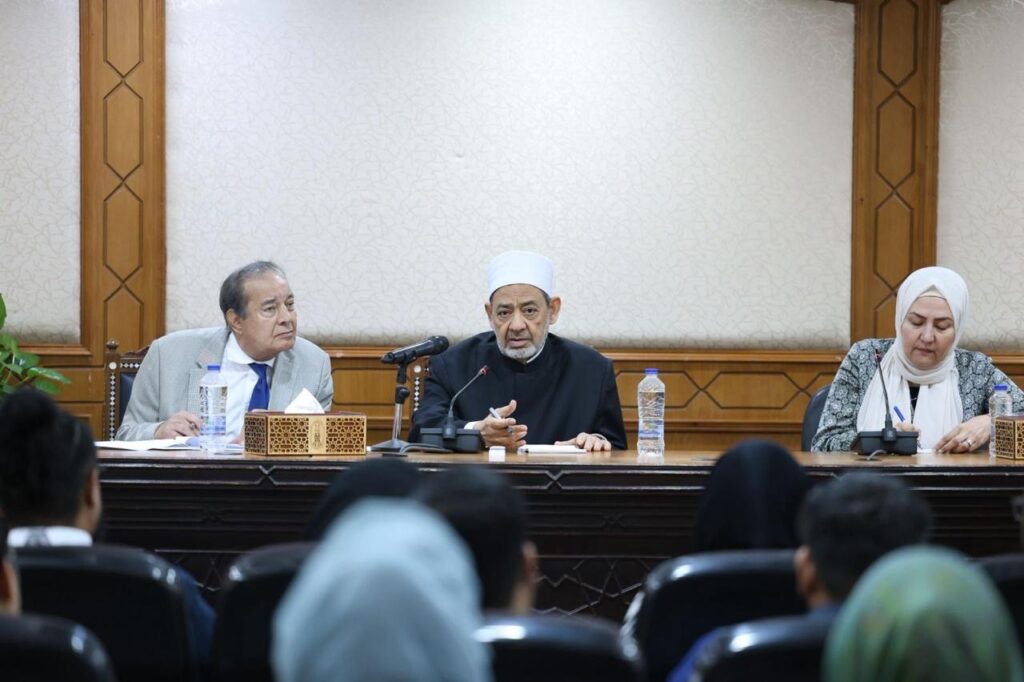
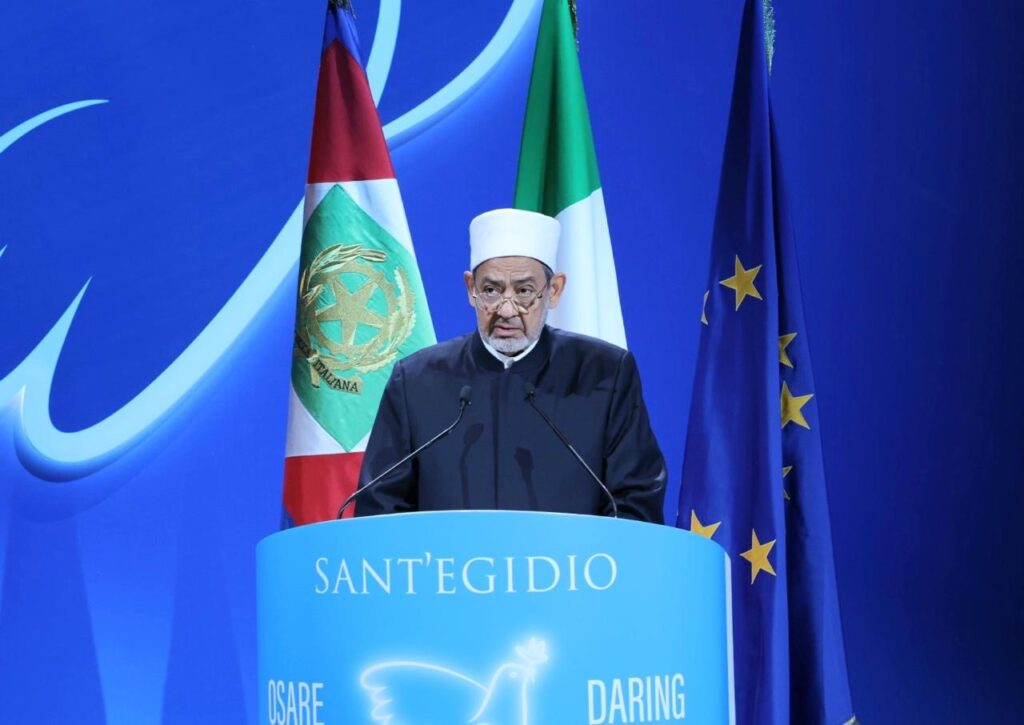
His Eminence Dr. Ahmed Al-Tayeb, the Grand Imam of Al-Azhar and Chairman of the Muslim Council of Elders, participated in the “Daring Peace” global summit organized by the Community of Sant’Egidio in Rome, in the presence of President of Italy Sergio Mattarella, Her Majesty Queen Mathilde of Belgium, and prominent religious leaders and academics from around the world.
In his address, His Eminence affirmed that absolute justice is the golden rule upon which the heavens and the earth were established. Allah made it the guarantor of human rights to equality, freedom, dignity, security, peace, and human fraternity among people, despite differences in race, gender, color, religion, and language.
The Grand Imam of Al-Azhar explained that the deliberate neglect of these values by contemporary civilization has led to senseless wars imposed on impoverished nations lacking the means to repel aggressors—those hardened in heart, devoid of conscience, and contemptuous of human dignity and the sanctity that Allah warned against violating in His heavenly scriptures and sacred revelation. This neglect has also caused economic crises such as poverty, unemployment, and famine; a divided world with a wealthy, indulgent North and a South burdened by wars, hunger, debt, disease, and epidemics; and environmental crises resulting from the depletion of natural resources, along with other disruptions to life and its hardships.
His Eminence added that social crises now stalk nations, tampering with their beliefs, sanctities, and religious and moral constants. They relentlessly target the family institution, promoting aberrant alternatives rejected by religions and ethics, repugnant to sound human sensibilities, and contrary to the innate disposition inherited by humanity since the time of Adam (PBUH) to this day.
His Eminence clarified that what humanity lacks in this era is the “ethics of justice and fairness.” Their absence has caused severe disruption in concepts and standards distinguishing good from evil, beauty from ugliness, and right from wrong. It has become commonplace to see injustice cloaked in the guise of law, domination and hegemony imposed on the poor and weak in the name of the global order, and tragedies and violations of sanctities justified under the pretext of interests and objectives.
The Grand Imam noted that the wars afflicting our once-secure East offer a profound lesson. Once their initial sparks ignite, they unleash a cascade of horrors and atrocities: homes demolished upon their inhabitants, thousands of women, elderly, and youth displaced, children starved to death, and human dignity violated with impunity—before the eyes and ears of a “civilized” world in the twenty-first century. Wretched is a freedom that denies the weak their sacred right to life on their land, and wretched is a justice that permits and rationalizes such abominations.
His Eminence expressed gratitude to the nations that recognized the State of Palestine during recent United Nations General Assembly, stating: “I cannot overlook, in this context, expressing sincere appreciation to the nations that have taken the initiative to recognize the State of Palestine. I salute them for this courage, which embodies the awakening of human conscience and its triumph for the usurped Palestinian right. We all hope this recognition becomes a practical step toward enabling the Palestinian people to attain their legitimate rights, foremost among them the establishment of their independent state with Jerusalem as its capital.” He noted that the international community today agrees that the two-state solution is the only path to peace in the region and the world, and that there can be no peace in the Middle East without the establishment of a Palestinian state. He also expressed appreciation for the honorable stances of free people worldwide—women, men, children, and elders in many nations—whose voices rose in condemnation of the massacres in Gaza, which broke the heart of humanity, slaughtered its conscience, and darkened the pages of modern history.
His Eminence affirmed that this scene, which has lasted over two years, reveals a grave flaw in the structure of the international system and profound disorder in its policies. International peace has become hostage to balances of power and their arrogance, the arms trade and its profits, and wars and their economies—all detached from the scale of truth and fairness, the call of duty and conscience, the inclinations of innate human nature with which Allah created people, and the logic of reason, which Allah made the most equitable distribution among humanity.
The Grand Imam of Al-Azhar stressed that these compound crises, reveal a severe disruption in the global order, causing it to lose its true direction and emboldening it to apply double standards—or a hundred standards if necessary. This affliction, can only be explained by odious racism and tyranny on earth—fundamentally contradicting the laws of “absolute justice” established by the Islam I believe in, as well as all prior divine messages. Great philosophers from Plato and Aristotle, through Al-Farabi and Ibn Rushd, to contemporary European thinkers, believed in the ethics of duty and the eternal human conscience.
His Eminence continued: “We must recognize that when justice is absent, oppression takes its place. With the injustices inflicted on people, values vanish, and humanity loses its essence beneath the feet of base material interests, false bravado, and predatory greed. When the weak are robbed of their rights and the oppressor is honored for seizing them, when a human being becomes a trivial number in political calculations and a cheap commodity in the marketplace, we realize that truth has set, and the world is plunging into a moral void foreboding the collapse of systems before their values and ethics.”
The Grand Imam added: “For this reason, Al-Azhar, the Muslim Council of Elders, and the Holy See came together to launch the historic Document on Human Fraternity, which I co-signed with my late brother, His Holiness Pope Francis, in Abu Dhabi in 2019. We clarified that peace is not a negative state defined by the absence of weapons—something unattainable in any case—but a positive, existential reality embodied in the presence of justice. We explained that justice is not the victory of one party over another, but the triumph of humanity over impulses of selfishness, domination, and material greed that control our social, economic, and behavioral stage.”
His Eminence also drew attention to the fact that artificial intelligence has become one of the driving forces creating significant change in societies. Therefore, we bear an ethical duty to harness this technology to build a more equitable and just future for humanity. We must realize that safeguarding our values and spiritual and religious heritage in the use of this new technology is not a luxury but a profound ethical commitment and major human responsibility. “We stand today at a civilizational crossroads: either we allow this new invention to entrench civilizational and moral regression, or we use it as a force to correct the human course.”
His Eminence continued: “I had begun, with my late brother Pope Francis, drafting a charter for the ethics of artificial intelligence. However, due to his illness and passing, the completion of this important document was delayed. Today, joint teams from Al-Azhar, the Holy See, and the Muslim Council of Elders are working to finalize it, to serve as a global ethical and human reference regulating the proper relationship between humans and the modern technologies they create, ensuring that artificial intelligence remains a servant of humanity, not a sword turned against it.”
The Grand Imam concluded by affirming that the world today is in dire need of justice to restore its tranquillity and a revived human conscience that recognizes that injustice—no matter how small—is a spark capable of igniting conflict anywhere. Every person wronged in this world is an unhealing wound in the body of humanity as a whole. This world will not rise unless it believes that justice is the supreme law of life and that peace is its natural fruit. He added that the root of today’s corruption lies in severing ethics from faith and attempting to preserve ethics while excluding faith. When divine religion ceases to guide ethics, ethics become subject to the winds, tools for conflict, greed, and the crushing of the poor and weak.