ALL

Interdisciplinary Approaches in Contemporary Peace Studies Highlighted at Seminar Hosted by the Muslim Council of Elders’ Pavilion at the Rabat International Book Fair

Dr. Mohamed Jamal: Contemporary challenges demand moving beyond traditional academic boundaries for deeper understanding and broader analysis of peace-related issues.

Dr. Samir Boudinar: Modern conflict resolution studies emphasize the essential role of “wisdom” and “the wise leaders” in promoting global peace.

As part of its cultural program at the 30th edition of the Rabat International Book Fair, the Muslim Council of Elders’ Pavilion hosted a thought-provoking seminar titled “Interdisciplinary Approaches in Contemporary Peace Studies.” The seminar was moderated by Dr. Mohamed Jamal, researcher at the Office for Manuscript Verification at Al-Azhar, Headquarters and featured a presentation by Dr. Samir Boudinar, Director of the Al-Hokama Center for Peace Research.

In his opening remarks, Dr. Mohamed Jamal highlighted the significance of the seminar’s theme, which explored the integration of tools and knowledge across diverse fields—ranging from political and social sciences to psychology, arts, and environmental studies. The goal, he explained, is to shed light on the theoretical and practical foundations of interdisciplinary methodologies and to examine real-world models that contribute to peacebuilding and the promotion of human coexistence across various sectors.

Dr. Jamal further noted that the seminar aims to foster a constructive scientific dialogue among researchers and practitioners in order to develop a more comprehensive understanding of the challenges and opportunities presented by these interdisciplinary approaches. He stressed that the world’s current complex and interconnected crises require moving beyond traditional academic methods to achieve deeper insight and more holistic analysis of contemporary peace issues.

For his part, Dr. Samir Boudinar emphasized that peace studies, since the inception of this academic field, have been characterized by what he termed “pluralistic disciplinary origins,” drawing from economics, sociology, political science, anthropology, psychology, education, and beyond. He underscored that building peace in any society requires the adoption of diverse approaches that benefit from the contributions and methodologies of multiple disciplines.

Dr. Boudinar also affirmed the critical role of wise figures in peacebuilding efforts in today’s world, stating that many conflicts can be resolved through the “wisdom of the wise.” He pointed out that recent studies in the field of peacebuilding highlight the importance of reviving traditional cultural frameworks for mediation and arbitration, such as tribal elders, spiritual leaders, senior citizens, and community sages.

He concluded by asserting that the concept of “wisdom” is both a moral and universal value that intersects with the idea of “everyday peace”—a form of peace shaped by multiple actors and interventions. He also stressed the need to understand domestic contexts and particularities in order to accurately analyze conflicts in war-affected countries and communities.

The Muslim Council of Elders’ Pavilion at the Rabat International Book Fair showcases over 250 diverse intellectual and cultural publications, including a number of its latest 2025 releases from Al-Hokama Publishing, addressing key contemporary intellectual and cultural issues. The Pavilion also hosts a series of cultural and scholarly events featuring prominent scholars, thinkers, authors, academics, and university professors, all in line with the Council’s vision and mission to promote peace and uphold the values of dialogue, tolerance, and human coexistence.
The Council’s Pavilion is located in the Souissi District of Morocco’s capital, Rabat, at Stand D47.

Interdisciplinary Approaches in Contemporary Peace Studies Highlighted at Seminar Hosted by the Muslim Council of Elders’ Pavilion at the Rabat International Book Fair Read More »

Seminar at the Muslim Council of Elders’ Pavilion at the Rabat International Book Fair Explores Cooperation Between Islam and the West as a Foundation for Enlightened Civilizational Dialogue

As part of its cultural program at the 30th edition of the Rabat International Book Fair, the Muslim Council of Elders’ pavilion hosted a seminar titled ‘Islam and the West: An Approach to the Causes of Tension and Conditions for Cultural Exchange.’ The session was moderated by Mr. Hamza Messaoudi, a researcher at the Al Hokama Center for Peace Research, and featured a presentation by Dr. Mohammed Al-Bunayyadi, Professor at the Faculty of Arts and Humanities at Dhar El Mahraz, Sidi Mohamed Ben Abdellah University in Fez. Dr. Al-Bunayyadi also coordinates the Master’s program in Contemporary Occidental Studies at the same faculty and serves as Chairman of the Shuhoud Center for Scientific Research and Civilizational Studies in Fez.

Opening the seminar, Mr. Masoudi emphasized that the Muslim Council of Elders, led by His Eminence Prof. Dr. Ahmed Al-Tayeb, Grand Imam of Al-Azhar, places great importance on the study of the relationship between Islam and the West, particularly through their historical and cultural intersections. He explained that the Al Hokama Center for Peace Research, recognizing the importance of this topic, published the book “Islam and the West: An Approach to Causes of Conflict and Monitoring the Conditions of Cultural Exchange” by Dr. Al-Bunayyadi. The book highlights the significance of understanding the Muslim world’s relationship with the West by tracing a series of historical and cultural interactions that have unfolded since the early days of the Prophetic mission, all the way to modern and contemporary dynamics.

Dr. Al-Bunayyadi noted that his work explores the potential for cultural exchange as an alternative to conflict. Drawing on the concept of “the Other”—its philosophical roots, social structure, and cultural expression—he called for new intellectual discourses that challenge prevailing stereotypes between Islam and the West. He pointed to the pressing need for new intellectual discourses that challenge the prevailing stereotypes between Islam and the West, and aim to establish a more balanced perspective in the mutual perception between the civilizational model of the Muslim world and that of the West—viewing the relationship between both as part of a continuum of past and future civilizational experiences.
 
In this regard, Dr. Mohamed Al-Bunayyadi emphasized that the book “Islam and the West: An Approach to Causes of Conflict and Monitoring the Conditions of Cultural Exchange” stands out for presenting a perspective rooted in the necessity of understanding the historical context in order to grasp the true nature of the relationship between Islam and the West. It adopts a forward-looking and visionary approach that contributes to contemporary discussions on this relationship, lays the groundwork for an enlightened dialogue grounded in historical awareness and mutual respect, and—most importantly—helps chart a path toward future cooperation. 

The Muslim Council of Elders’ pavilion at the Rabat International Book Fair features over 250 diverse intellectual and cultural publications, including several of the Council’s latest 2025 releases addressing major cultural and philosophical themes. The pavilion also hosts a series of thought-provoking events with leading scholars, thinkers, writers, academics, and university professors. This initiative reflects the Council’s mission to promote peace and advance the values of dialogue, tolerance, and human coexistence. The Council’s pavilion is located at Stand D47 in the Souissi district of Rabat, the capital of Morocco.

Seminar at the Muslim Council of Elders’ Pavilion at the Rabat International Book Fair Explores Cooperation Between Islam and the West as a Foundation for Enlightened Civilizational Dialogue Read More »

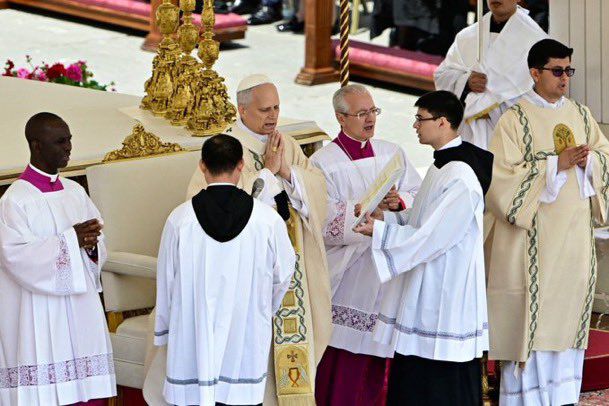
Muslim Council of Elders  Mourns Pope Francis, Affirming: He Dedicated His Life to Promoting Love, Peace, Coexistence, and Human Fraternity

The Muslim Council of Elders , under the chairmanship of His Eminence Dr. Ahmed Al-Tayeb, the Grand Imam of Al-Azhar, together with its esteemed members and Secretary-General, His Excellency Judge Mohamed Abdelsalam, mourns the passing of His Holiness Pope Francis, Pontiff of the Catholic Church, who passed away today at the age of 88.

His Excellency Judge Mohamed Abdelsalam, Secretary-General of the Muslim Council of Elders, emphasized that Pope Francis devoted his life to serving humanity and advancing the values of dialogue, tolerance, coexistence, peace, and human fraternity while he also tirelessly supported the vulnerable, needy, refugees, and the displaced, embodying a singular example of compassion and becoming a historic religious figure whose enduring humanitarian legacy will inspire future generations. In partnership with His Eminence Dr. Ahmed Al-Tayeb, the Grand Imam of Al-Azhar and Chairman of the Muslim Council of Elders, Pope Francis co-authored the historic Document on Human Fraternity, widely regarded as one of the most significant documents in modern human history.

The Muslim Council of Elders extends its deepest condolences to the leaders of the Catholic Church, our Christian brethren, and all advocates of peace and coexistence worldwide. We pray that Almighty Allah grants the departed’s loved ones and admirers strength, patience, and solace during this time of loss.

Muslim Council of Elders  Mourns Pope Francis, Affirming: He Dedicated His Life to Promoting Love, Peace, Coexistence, and Human Fraternity Read More »

Seminar at Rabat International Book Fair Highlights the Muslim Council of Elders’ Efforts in Promoting Intra-Islamic Dialogue

Dr. Mohamed Gamal: The Muslim Council of Elders Is Making Tireless Efforts to Heal the Rift Within the Muslim Ummah

Dr. Elias Mohamed Belka: Al-Azhar and the Muslim Council of Elders Are Leading Groundbreaking Initiatives to Unite the Ummah

As part of its cultural program at the 30th edition of the Rabat International Book Fair, the Muslim Council of Elders hosted its second cultural seminar, titled “The Problem of the Ummah’s Division into Sunnis and Shiites.” The session was moderated by Dr. Mohamed Gamal, a researcher at the Heritage Revival Office of Al-Azhar, and featured a presentation by Dr. Elias Mohamed Belka, Professor at Sidi Mohamed Ben Abdellah University in Fez and Director of Strategic Studies at the Al Hokama Center for Peace Research.

Opening the session, Dr. Mohamed Gamal emphasized that the Muslim Council of Elders, under the chairmanship of His Eminence Prof. Dr. Ahmed Al-Tayeb, Grand Imam of Al-Azhar, is undertaking tireless efforts to mend the divisions within the Islamic nation. He highlighted the Grand Imam’s 2022 call for intra-Islamic dialogue aimed at rejecting sectarian strife and conflict and reuniting the diverse schools of thought within Islam. These efforts culminated in the first edition of the Intra-Islamic Dialogue Conference, held in February this year in the Kingdom of Bahrain under the theme “One Ummah… One Shared Destiny.” A major outcome of the conference was the Call of the People of the Qibla—a comprehensive charter for unity and reconciliation within the Ummah.

Dr. Elias Mohamed Belka, Professor at Sidi Mohamed Ben Abdellah University in Fez and Director of Strategic Studies at the Al Hokama Center for Peace Research, commended the efforts of the Muslim Council of Elders, led by His Eminence Prof. Dr. Ahmed Al-Tayeb, in bridging the divide across the Islamic world. He noted that the Al Hokama Center has given significant attention to the issue of sectarian division, and recently published a book titled “The Problem of the Ummah’s Division into Sunnis and Shiites: Origins and Solutions.”

He further noted that Al-Azhar and the Muslim Council of Elders, fully aware of the dangers posed by internal conflict, have established a vital initiative to heal the rift. Under the leadership of the Grand Imam, they are spearheading groundbreaking efforts such as organizing the Intra-Islamic Dialogue Conference in Bahrain and launching the Call for the People of  Qiblah: One Ummah… One Shared Destiny.

At the Rabat International Book Fair, the Muslim Council of Elders’ pavilion showcases over 250 diverse intellectual and cultural publications, including several of Al Hokama Publishing’s latest 2025 releases addressing pressing contemporary issues. The pavilion is also hosting a wide range of cultural and intellectual activities, featuring prominent scholars, thinkers, writers, academics, and university professors. These efforts reflect the Council’s vision and mission to promote peace and foster the values of dialogue, tolerance, and human coexistence. The Council’s pavilion is located at Stand D47 in the Souissi district of Rabat, the capital of Morocco.

Seminar at Rabat International Book Fair Highlights the Muslim Council of Elders’ Efforts in Promoting Intra-Islamic Dialogue Read More »

Muslim Council of Elders’ Pavilion at the Rabat International Book Fair (RIBF) Hosts a Seminar on Promoting Peace in Africa

Dr. Samir Boudinar: The Muslim Council of Elders places remarkable emphasis on civil and societal peace

Dr. Adel Moussaoui: The book ‘Peace in Africa’ is an extension of a regional studies initiative launched by Al Hokama Center for Peace Research


The Pavilion of the Muslim Council of Elders at the 30th Rabat International Book Fair hosted its first cultural seminar, titled “Peace in Africa: Studies and Visions for Enhancing Stability and Development.” The seminar featured Dr. Samir Boudinar, Director of the Al Hokama Center for Peace Research, and Dr. Adel Moussaoui, a political science and international relations researcher at Mohammed V University in Rabat.
  
At the start of the seminar, Dr. Samir Boudinar stated that the book Peace in Africa: Studies and Visions for Enhancing Stability and Development, published by the Al Hokama Center for Peace Research, is the result of a research project focused on Muslim communities and peace in Africa. It reflects the Muslim Council of Elders’ strong commitment to civil and societal peace, conflict resolution, and the consolidation of sustainable peace. He noted that Dr. Adel Moussaoui was one of the contributors to this collective volume and presented a significant scholarly contribution based on his extensive academic and research expertise.

Dr. Boudinar further explained that the book is a valuable addition to the field of African studies, addressing new aspects within this body of knowledge, not only through the broad range of topics and approaches it covers, but also through the creative and innovative methodologies it employs.

For his part, Dr. Adel Moussaoui said that the book falls within the domain of African studies and represents the product of collective work carried out under the African Studies Program at the Al Hokama Center for Peace Research, affiliated with the Muslim Council of Elders. It is part of a broader regional studies initiative launched by the center. He noted that the book presents diverse intellectual frameworks and themes, adopting an approach that proposes a new model for building peace and fostering development. The work is rooted in African identity and culture, employing an analytical method that draws upon local African components. 

The political science and international relations scholar at Mohammed V University in Rabat added that the book seeks to develop a knowledge-based framework that interacts with Western paradigms. It offers a distinctive contribution to the African studies field and succeeds to a considerable extent in presenting a scholarly vision on peace in Africa, along with possible pathways for achieving reconciliation and coexistence based on human rights, social justice, and the restoration of social solidarity and shared humanity.

The Muslim Council of Elders’ pavilion at the Rabat International Book Fair showcases over 250 diverse intellectual and cultural publications, including several of the Council’s latest 2025 releases, which address prominent intellectual and cultural issues. The pavilion also hosts a series of cultural and intellectual activities featuring leading scholars, thinkers, writers, intellectuals, academics, and university professors. All of this aligns with the Council’s vision and mission to promote peace and instill the values of dialogue, tolerance, and human coexistence. The Council’s pavilion is located at the iconic OLM Souissi in Rabat, at Pavilion D47.

Muslim Council of Elders’ Pavilion at the Rabat International Book Fair (RIBF) Hosts a Seminar on Promoting Peace in Africa Read More »

Muslim Council of Elders to Participate at the 2025 Rabat International Book Fair

The Muslim Council of Elders is participating at the 30th edition of the Rabat International Book Fair, held from April 17 to 27, 2025. This participation aligns with the Council’s mission to promote peace, reinforce the values of dialogue and tolerance, and build bridges of cooperation and human coexistence.

Throughout the fair, the Muslim Council of Elders’ pavilion will showcase over 250 diverse intellectual and cultural publications, including several of the latest releases from Al-Hokama Publishing for 2025. Also, in line with the Council’s efforts to foster intra-Islamic dialogue, its pavilion at the Erbil International Book Fair will present several works addressing this pivotal issue, including Conflict Management in the Muslim World by Dr. Idris Qasim, a researcher in foreign policy and a doctor of public law, and Issues of the Ummah’s Division into Sunni and Shia by the Islamic thinker Dr. Ilyas Belka.

The pavilion will also feature more than 20 works by His Eminence Prof. Dr. Ahmed Al-Tayeb, the Grand Imam of Al-Azhar and Chairman of the Muslim Council of Elders. These works aim to highlight the tolerance of Islam and the richness of its intellectual and philosophical heritage. Titles include Al Qawl Al Tayeb, From My Old Notebooks, An Opinion on East-West Dialogue, An Introduction to the Study of Ancient Logic, Discourse on Causes and Intentions, On Sufi Theological Terminology, Heritage and Renewal, For the Sake of Peace, Perspectives on Imam Al-Ash’ari’s Thought, Manners and Values, Toward Contemporary Jurisprudential Reasoning, and Lady Aisha, Mother of the Believers, among others.

Additionally, the pavilion will offer several significant publications, including Love in the Holy Qur’an by Prince Ghazi Al-Hashemi, a member of the Muslim Council of Elders; The Pope and the Grand Imam: A Thorny Path by Judge Mohammed Abdelsalam, Secretary-General of the Muslim Council of Elders; Rules of Understanding and Mutual Comprehension in Thought and Language by Dr. Mustafa Benhamza, a member of the Muslim Council of Elders; Muslims at a Crossroads by the late Dr. Mahmoud Hamdi Zaqzouq; and Horizons of Mutual Recognition in Morocco and Andalusia by Dr. Jaafar Ibn Al-Haj Al-Salami.

Recognizing the importance of translation as a bridge between civilizations for constructive communication, the Muslim Council of Elders continues its diligent efforts to translate numerous books aimed at promoting peace. This year, it will present several translated works, including The Voice of Change, Shared Global Values and the Making of International Peace by a group of researchers, as well as other translated publications such as Confronting Islamophobia in Europe by various researchers, Islam and Good Governance by Prof. Dr. Muqtader Khan, and Islam, the West, and Tolerance: Realizing Coexistence by Aaron Tyler, among others.

The Muslim Council of Elders’ pavilion at the Rabat International Book Fair will also host numerous cultural and intellectual activities focusing on key issues, such as promoting peace, human coexistence, spreading the values of dialogue, and reinforcing the unity and solidarity of the Muslim world. The Council’s pavilion (D47) can be found at the OLM Souissi arena in capital of Morocco, Rabat.

Muslim Council of Elders to Participate at the 2025 Rabat International Book Fair Read More »

Muslim Council of Elders Participates in the Global Justice, Love, and Peace Summit at Expo City Dubai

During his speech at the Global Justice, Love and Peace Summit at Expo City Dubai, the Muslim Council of Elders Secretary-General calls for uniting efforts to protect Planet Earth and achieve a more just and sustainable future for humanity.

Secretary-General of the Muslim Council of Elders: The UAE stands as a beacon of tolerance, coexistence, compassion, and peace.

Judge Abdelsalam: A unified international strategy is essential to confront global challenges and halt the ongoing wars and conflicts worldwide.

Secretary-General of the Muslim Council of Elders: Religions were revealed to bring happiness to people and to promote the values of goodness, love, justice, coexistence, and peace.

Judge Abdelsalam: Today’s world is in dire need of upholding the values of tolerance, coexistence, and human fraternity.


His Excellency Judge Mohamed Abdelsalam, Secretary-General of the Muslim Council of Elders, took part in the Global Justice, Love and Peace Summit held at Expo City Dubai from April 12 to 13, with the participation of 12 Nobel Peace Prize laureates, along with several heads of state, leaders, dignitaries, senior officials, international figures, and religious leaders. The summit is held under the patronage of His Excellency Sheikh Nahyan bin Mubarak Al Nahyan, Minister of Tolerance and Coexistence in the United Arab Emirates.

Speaking during a session titled “Beloved Mother Earth, Our Home: Can Love for the Planet Inspire a More Sustainable Future?”, the Secretary-General stated that this important summit, hosted by Expo Dubai in the United Arab Emirates—a land of tolerance, coexistence, love, and peace—represents a valuable opportunity to unite efforts to protect our planet and secure a more sustainable future for ourselves and future generations. He emphasized the importance of strengthening joint action to promote the values of justice, love, and peace, especially in light of the many challenges, wars, and conflicts facing the world today.

The Secretary-General called for a unified international strategy to confront global challenges, noting that religions were revealed to bring happiness to people and to spread the values of goodness, love, justice, coexistence, and peace. He highlighted the pressing need to elevate the values of dialogue, tolerance, coexistence, and human fraternity. He also stressed the importance of restoring the role of religions in activating the values of love and inspiring humanity’s goodwill towards others, making our shared home more balanced and capable of sustaining its role as a dwelling place for the honored human being worthy of dignity and esteem.

Judge Abdelsalam pointed to the efforts undertaken by the Muslim Council of Elders since its establishment in Abu Dhabi in 2014 to promote peace, dialogue, tolerance, and coexistence. He highlighted the role of religious leaders in addressing global challenges—foremost among them environmental peace and the preservation of our shared home, Earth, and confronting climate change, a decisive issue threatening life on this planet. He cited several initiatives in this regard, including the Global Summit of Religious Leaders, which culminated in the release of the Call of Conscience: The Abu Dhabi Joint Declaration on Climate, and the organization of the Faith Pavilion at COP28 in Dubai—the first of its kind in the history of UN Climate Conferences—as well as its second version at COP29 in Baku, Azerbaijan.

The Secretary-General concluded by affirming that the Muslim Council of Elders extends its hand to all parties to work together in raising awareness, developing policies and legislation, expanding green innovation and technology, and engaging all sectors of society in a collective effort to achieve a more just, inclusive, and sustainable future for humanity and the preservation of Planet Earth.

Muslim Council of Elders Participates in the Global Justice, Love, and Peace Summit at Expo City Dubai Read More »

“The Call of the People of Qiblah and Prospects for Civil Peace in Muslim Societies” – A Seminar at the Muslim Council of Elders’ Pavilion at the Erbil International Book Fair

The Muslim Council of Elders’ pavilion at the Erbil International Book Fair hosted a seminar titled “The Call of the People of Qiblah and Prospects for Civil Peace in Muslim Societies”, presented by Dr. Samir Boudinar, Director of the Al-Hokama Center for Peace Research. The seminar was part of the Council’s efforts to promote intra-Islamic dialogue to unify the Muslim Ummah and foster its solidarity.

At the start of the seminar, Dr. Samir Boudinar explained that the “Call of the People of Qiblah” is the outcome of the Intra-Islamic Dialogue Conference held in the Kingdom of Bahrain in February 2024, chaired by His Eminence Dr. Ahmed Al-Tayeb, the Grand Imam of Al-Azhar and Chairman of the Muslim Council of Elders. The conference brought together prominent scholars from various Islamic denominations and schools of thought to formulate a shared vision for enhancing Islamic brotherhood and countering sectarian division.

The Director of the Al-Hokama Center for Peace Research clarified that the Call of the People of Qiblah is a charter containing key principles for preserving the unity of the Ummah. These include promoting scholarly and doctrinal understanding among scholars and academic institutions, confronting schemes of discord, mitigating risks that threaten the fabric of Muslim society, acknowledging the legitimacy of doctrinal differences, and prioritizing Islamic unity.

Dr. Boudinar concluded by urging religious, academic, and media institutions to implement the principles of the Call of the People of Qiblah through programs and workshops, emphasizing the importance of involving youth in these initiatives to ensure the sustainability of civil peace in Muslim societies.

The Muslim Council of Elders is participating at the Erbil International Book Fair from April 9 to 17, 2025, showcasing over 250 diverse intellectual and cultural publications to promote the values of dialogue, tolerance, and coexistence.

“The Call of the People of Qiblah and Prospects for Civil Peace in Muslim Societies” – A Seminar at the Muslim Council of Elders’ Pavilion at the Erbil International Book Fair Read More »

The Muslim Council of Elders offers condolences to the President of Al-Azhar University on the death of his father.

The Muslim Elders Council, under the chairmanship of His Eminence Prof. Dr. Ahmed Al-Tayeb, the Grand Imam of Al-Azhar, along with the esteemed members of the Council and its Secretary-General, His Excellency Judge Mohamed Abdelsalam, extends its heartfelt condolences to His Eminence Prof. Dr. Salama Dawood, President of Al-Azhar University, on the passing of his father.

The Muslim Elders Council expresses its deepest sympathies to the family of the deceased, praying that Almighty Allah envelops him in His boundless mercy, grants him a place in the vastness of His paradise, and bestows patience and solace upon his family, loved ones, and all those who cherished him.

To Allah we belong and to Him we shall return.

The Muslim Council of Elders offers condolences to the President of Al-Azhar University on the death of his father. Read More »

For the First Time: Muslim Council of Elders Participates at the 2025 Erbil International Book Fair

The Muslim Council of Elders is participating for the first time at the 17th edition of the Erbil International Book Fair, held from April 9 to 19, 2025. This participation aligns with the Council’s mission to promote peace, reinforce the values of dialogue and tolerance, and build bridges of cooperation and human coexistence.

Throughout the fair, the Muslim Council of Elders’ pavilion will showcase over 250 diverse intellectual and cultural publications, including several of the latest releases from Al-Hokama Publishing for 2025. Also, in line with the Council’s efforts to foster intra-Islamic dialogue, its pavilion at the Erbil International Book Fair will present several works addressing this pivotal issue, including Conflict Management in the Muslim World by Dr. Idris Qasim, a researcher in foreign policy and a doctor of public law, and Issues of the Ummah’s Division into Sunni and Shia by the Islamic thinker Dr. Ilyas Belka.

The pavilion will also feature more than 20 works by His Eminence Prof. Dr. Ahmed Al-Tayeb, the Grand Imam of Al-Azhar and Chairman of the Muslim Council of Elders. These works aim to highlight the tolerance of Islam and the richness of its intellectual and philosophical heritage. Titles include Al Qawl Al Tayeb, From My Old Notebooks, An Opinion on East-West Dialogue, An Introduction to the Study of Ancient Logic, Discourse on Causes and Intentions, On Sufi Theological Terminology, Heritage and Renewal, For the Sake of Peace, Perspectives on Imam Al-Ash’ari’s Thought, Manners and Values, Toward Contemporary Jurisprudential Reasoning, and Lady Aisha, Mother of the Believers, among others.

Additionally, the pavilion will offer several significant publications, including Love in the Holy Qur’an by Prince Ghazi Al-Hashemi, a member of the Muslim Council of Elders; The Pope and the Grand Imam: A Thorny Path by Judge Mohammed Abdelsalam, Secretary-General of the Muslim Council of Elders; Rules of Understanding and Mutual Comprehension in Thought and Language by Dr. Mustafa Benhamza, a member of the Muslim Council of Elders; Muslims at a Crossroads by the late Dr. Mahmoud Hamdi Zaqzouq; and Horizons of Mutual Recognition in Morocco and Andalusia by Dr. Jaafar Ibn Al-Haj Al-Salami.

Recognizing the importance of translation as a bridge between civilizations for constructive communication, the Muslim Council of Elders continues its diligent efforts to translate numerous books aimed at promoting peace. This year, it will present several translated works, including The Voice of Change, Shared Global Values and the Making of International Peace by a group of researchers, as well as other translated publications such as Confronting Islamophobia in Europe by various researchers, Islam and Good Governance by Prof. Dr. Muqtader Khan, and Islam, the West, and Tolerance: Realizing Coexistence by Aaron Tyler, among others.

The Muslim Council of Elders’ pavilion at the Erbil International Book Fair will also host numerous cultural and intellectual activities focusing on key issues, such as promoting peace, human coexistence, spreading the values of dialogue, and reinforcing the unity and solidarity of the Muslim world. The pavilion is located in Hall D, Pavilion 5D, at the Erbil International Book Fair, running from April 9 to 19, 2025.

For the First Time: Muslim Council of Elders Participates at the 2025 Erbil International Book Fair Read More »