
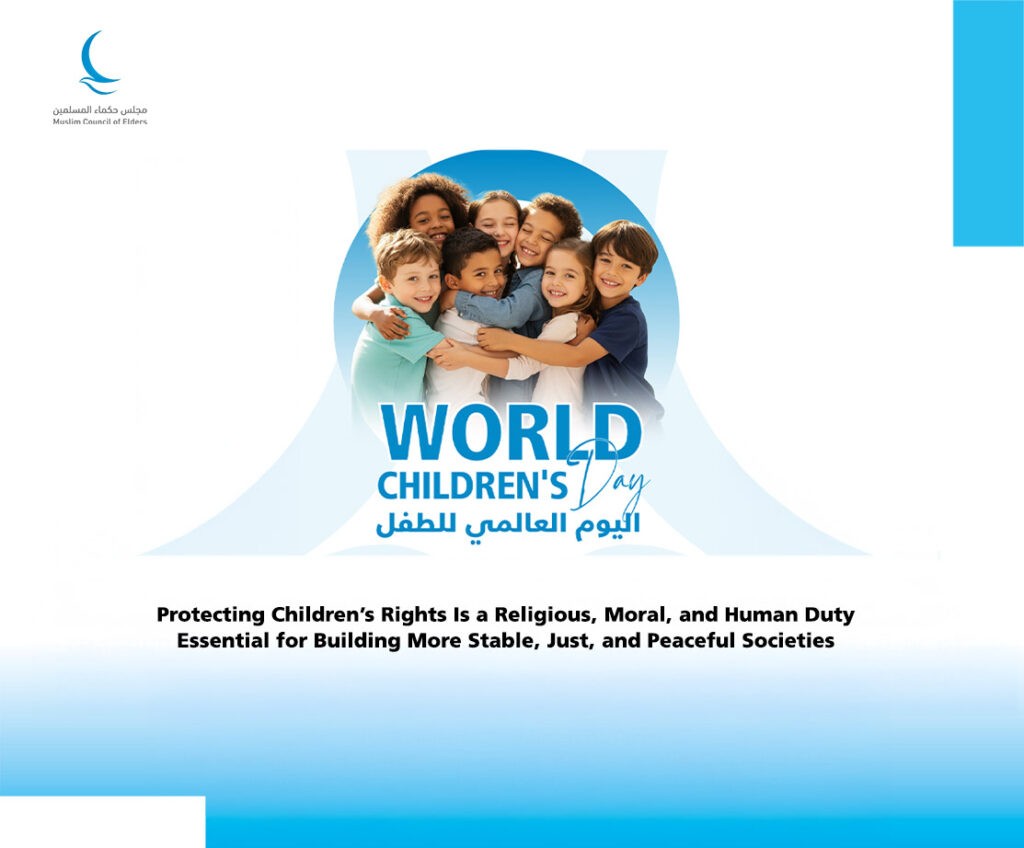
The Muslim Council of Elders, chaired by His Eminence Prof. Dr. Ahmed Al-Tayeb, Grand Imam of Al-Azhar, affirmed that protecting children’s rights is a religious, moral, and human imperative that contributes to building more stable, just, and peaceful societies. The Council stressed that investing in children is an investment in the future of nations, emphasizing the need for collective international and community efforts to safeguard the security, safety, and well-being of children everywhere.
In a statement marking World Children’s Day, observed annually on 20 November, the Council highlighted that children form the foundation of every society, and that safeguarding their rights is a shared responsibility. This includes ensuring their full access to education, healthcare, and protection from violence and neglect. The Council underscored the importance of providing a safe, balanced environment that nurtures children’s abilities and helps develop personalities capable of contributing positively to society.
The Muslim Council of Elders also noted the pivotal role of the family in instilling moral and human values in children, and in reinforcing the principles of compassion, dialogue, and mutual respect. It called for intensified efforts to protect children affected by conflict, disasters, and poverty, and to provide them with the necessary support to guarantee a dignified life and fair opportunities for learning and development. This aligns with the principles of the historic Document on Human Fraternity, signed by His Eminence Prof. Dr. Ahmed Al-Tayeb, the Grand Imam of Al-Azhar, and the late Pope Francis, former Head of the Catholic Church, which places human dignity and the right to a safe life at the forefront of priorities.
The Muslim Council of Elders places significant emphasis on children and youth through its programs and initiatives aimed at promoting the values of human fraternity and peaceful coexistence. These include supporting educational and developmental initiatives that cultivate the principles of compassion, cooperation, and respect for others, protect young people from extremist ideologies and hatred, and empower them to contribute positively to building fairer and more equitable societies.